In This Article
Jupiter Inlet Colony occupies one of the most concentrated high-value roofing environments in northern Palm Beach County — a small, exclusive barrier island municipality positioned directly at the Jupiter Inlet where the Atlantic Ocean, the Intracoastal Waterway, and the Loxahatchee River converge. Every property in the Colony faces the combined exposure of three open water bodies simultaneously, creating salt aerosol concentrations, wind turbulence patterns, and storm surge risk that are unique even by South Florida’s demanding coastal standards. For Jupiter Inlet Colony homeowners, roofing specification is not a cost-optimization exercise — it is a critical infrastructure decision where the correct material selection, installation quality, and contractor experience directly determine how the property performs during the severe weather events that this location will inevitably experience.
The Jupiter Inlet Colony Environment — Three Water Bodies, Maximum Exposure
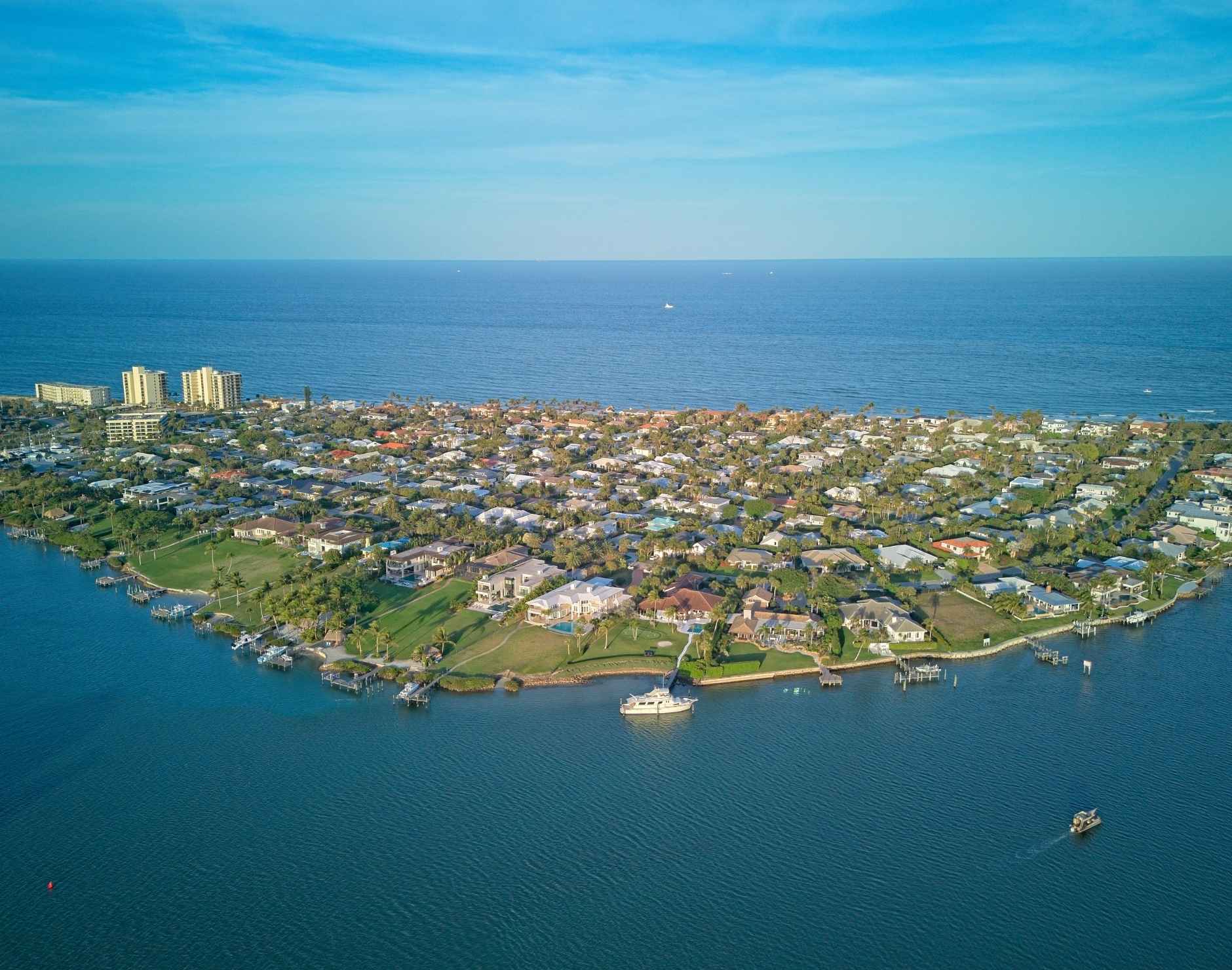
Jupiter Inlet Colony is a Town of Palm Beach County incorporated municipality occupying the southern tip of the Jupiter Island barrier island chain — a narrow spit of land where the Atlantic Ocean faces east, the Jupiter Inlet runs along the southern boundary, and the Intracoastal Waterway faces west. The Colony’s geographic position at this convergence means that there is no sheltered elevation on any property — every building face is within direct salt spray distance of at least one open water body, and the prevailing southeast wind carries Atlantic aerosol across the inlet and over the island’s full width throughout the summer months.
The Jupiter Inlet itself is a significant amplifier of roofing exposure conditions for Colony properties. The inlet’s orientation channels the prevailing southeast wind across the water surface and concentrates wind-driven spray and salt aerosol at elevated concentrations for properties on either bank. The Intracoastal-facing properties on the Colony’s western side experience the amplified exposure from the inlet’s channeling effect even though they do not face the open Atlantic directly — the inlet’s proximity means their western exposure is functionally equivalent in salt intensity to a direct Intracoastal waterfront position further south, with the additional turbulence effects generated by the inlet’s current and wave action.
The Colony’s permit jurisdiction is the Town of Jupiter Inlet Colony — a separate municipal building department with its own permit process, inspectors, and administrative requirements that differs from both Palm Beach County’s unincorporated building division and the neighboring Town of Jupiter Island’s jurisdiction. Contractors who primarily work in Palm Beach County’s unincorporated areas — the vast majority of northern Palm Beach County — may not have an established relationship with the Colony’s building department and may not be familiar with the Town’s specific permit submission requirements and inspection sequencing. This jurisdictional specificity is a genuine qualification differentiator for Colony projects.
HVHZ Requirements and Inlet Proximity Considerations
Jupiter Inlet Colony falls squarely within the High-Velocity Hurricane Zone — the HVHZ classification that applies throughout Palm Beach County and that requires HVHZ-listed Florida Product Approvals for all roofing components, TAS-tested performance, and the two-fastener minimum tile roof installation that distinguishes HVHZ work from the rest of Florida. These requirements apply to every permitted roofing project in the Colony regardless of scope, and the Town of Jupiter Inlet Colony’s building department enforces them with the same rigor as Palm Beach County’s building division.
The ASCE 7-22 Exposure Category for all Colony properties is unambiguously Category D — the maximum coastal exposure classification. The Colony’s position between the open Atlantic and the broad Intracoastal, combined with the Jupiter Inlet’s open water fetch, places every property well within the 1,500-foot Category D boundary from multiple water body directions simultaneously. The design wind pressures calculated for Category D structures at the 160 mph Palm Beach County design wind speed produce uplift requirements at the most exposed roof zones that approach or exceed the upper range of prescriptive HVHZ installation tables — making site-specific engineering a common requirement for Colony projects with larger roof areas or complex multi-plane geometries.
The wind mitigation inspection framework at Jupiter Inlet Colony properties carries the highest financial stakes of any residential market in the Tequesta service area. Colony properties with large footprints and premium replacement values carry annual wind insurance premiums that, for the highest-value estates, can exceed $60,000 to $100,000 per year at below-maximum mitigation ratings. The difference between minimum and maximum wind mitigation ratings for these properties — achieved through complete HVHZ re-roofing, deck re-nailing, strap installation, and opening protection — can represent $20,000 to $40,000 in annual premium savings. At that scale, the payback period for a comprehensive wind mitigation upgrade performed during re-roofing is measured in months, not years.
Exposure Category D throughout — every elevation, every property The Colony’s position between multiple open water bodies means there is no Category C or B exposure anywhere within its boundaries. Maximum coastal design pressures apply to every roof plane on every property.
Town of Jupiter Inlet Colony permit jurisdiction — not Palm Beach County The Colony has its own municipal building department with its own submission requirements and inspectors. Verify your contractor’s specific experience with Town of Jupiter Inlet Colony permit submissions before engaging.
Site-specific engineering commonly required for large-footprint estates Category D pressures at the Colony’s largest properties frequently exceed prescriptive table values. Stamped engineering documentation for uplift resistance is a standard project component for Colony estates over approximately 4,000 square feet of roof area.
Wind mitigation upgrades worth $20,000–$40,000 annually on premium estates At Jupiter Inlet Colony’s insurance premium levels, comprehensive wind mitigation upgrades during re-roofing deliver payback within months. The financial case for maximum ratings here is the strongest in the entire Tequesta service area.
Material Specification for Jupiter Inlet Colony’s Maximum Exposure
The material specification for a Jupiter Inlet Colony roofing project represents the highest standard in the Tequesta service area’s coastal specification hierarchy — one step above the Jupiter Island and lower Loxahatchee River specifications and substantially above the standard coastal specification appropriate for Intracoastal Tequesta or Country Club Drive properties. The Colony’s simultaneous triple-water-body exposure, combined with the inlet’s channeling effect on wind and spray, creates conditions that require the most conservative available interpretation of every marine-grade material standard.
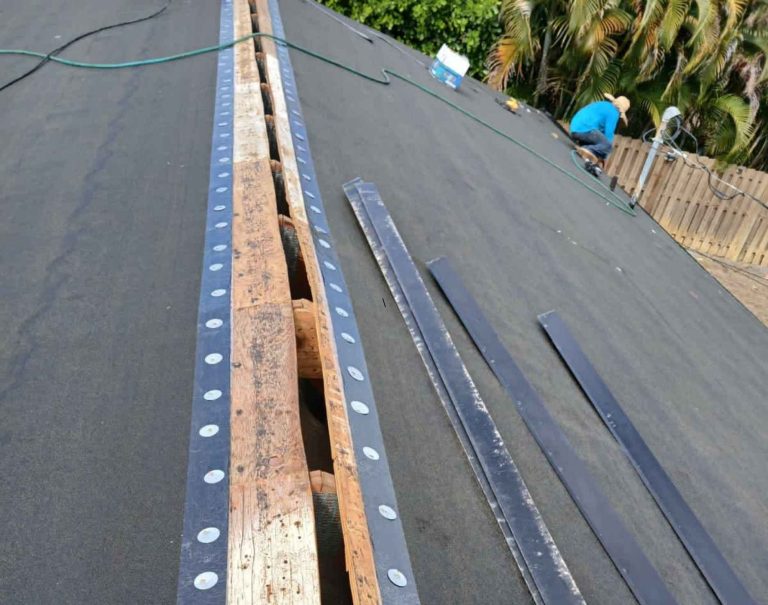
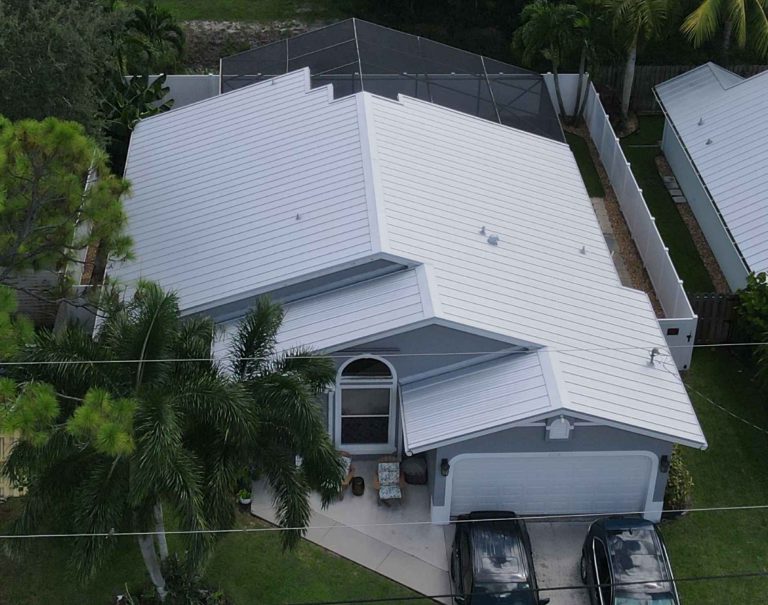
For metal roofing systems — the specification Luxe Builder Group recommends for most Colony properties given the combination of maximum wind resistance, maximum salt corrosion resistance, and solar compatibility that Kynar-coated standing seam aluminum provides — the minimum specification is 0.040-inch aluminum alloy panels rather than the 0.032-inch minimum appropriate for less exposed locations. The additional material thickness provides greater resistance to the panel denting and deformation that wind-driven debris can produce during the severe weather events that Jupiter Inlet Colony properties experience, and it increases the mechanical reserve against the sustained uplift cycles that Category D pressures impose on the panel-clip interface over the system’s life. Type 316 stainless steel is the only acceptable fastener specification for every metal component — clips, screws, ridge fasteners, and trim attachment — at the Colony’s direct inlet exposure level.
For tile roofing systems on Colony properties where the architectural program calls for tile — the Mediterranean and Caribbean-influenced residential styles that characterize some Colony estates — the specification must include foam adhesive installation throughout the field in addition to the two-fastener minimum, rather than limiting foam supplementation to corner and edge zones only. The Colony’s wind pressure environment makes full-field foam adhesive the appropriate specification for maximizing tile uplift resistance across the entire roof surface. Underlayment specification should be the highest-rated self-adhering SWB available with HVHZ listing — the secondary water barrier on a Colony property may be called upon to resist wind-driven water infiltration at sustained pressures and durations that exceed what any other location in the service area routinely experiences.
Contractor Qualifications for Jupiter Inlet Colony Projects
The contractor qualification bar for a Jupiter Inlet Colony roofing project is the highest in the Tequesta service area — higher than Jupiter Island, higher than Hobe Sound, and substantially higher than the standard Palm Beach County residential market. The combination of the Colony’s unique permit jurisdiction, maximum exposure classification, marine-grade material requirements, and high-value property stock creates a contractor selection environment where the consequences of choosing incorrectly are severe and the qualifications needed to choose correctly are specific and verifiable.
The first and non-negotiable qualification is documented experience with the Town of Jupiter Inlet Colony permit process. This is not the same as Palm Beach County permit experience, and it is not the same as experience with neighboring Jupiter Island or the Town of Jupiter Island. The Colony has its own building department, its own inspectors, and its own administrative requirements. A contractor who tells you they are familiar with the Colony’s permit process without being able to name specific recent Colony projects and provide the Town permit numbers for verification is not a contractor with Colony experience — they are a contractor who expects to learn the process on your project.
The second qualification is marine-grade material knowledge at the Colony’s specification level. The specific questions to ask are: What aluminum gauge do you specify for standing seam panels at Jupiter Inlet Colony, and why? What stainless steel grade do you use for fasteners, and what is the difference in chloride resistance between your specification and standard stainless? What flashing gauge and material do you propose for a Colony oceanfront property’s valley flashings? A contractor who can answer these questions with the correct answers — 0.040-inch aluminum, Type 316 stainless, 0.040-inch stainless or PVDF aluminum for valley flashings — has the material knowledge the Colony requires. A contractor who cannot is relying on HVHZ minimum standards that are inadequate for the Colony’s actual exposure conditions.
Require Town of Jupiter Inlet Colony permit numbers — not just county experience Palm Beach County permit history does not qualify a contractor for Colony work. Request at least two recent Town of Jupiter Inlet Colony permit numbers and verify them through the Town’s building department before engaging any contractor.
Test marine-grade specification knowledge with three specific questions Panel gauge, stainless steel grade, and valley flashing specification are the three questions that separate Colony-qualified contractors from those applying standard coastal minimums. Correct answers: 0.040-inch aluminum, Type 316 stainless, 0.040-inch flashing.
Plan wind mitigation upgrades as core project scope — not optional add-ons At the Colony’s insurance premium levels, strap installation and deck re-nailing during re-roofing deliver the fastest payback of any capital investment available to the homeowner. These are not optional — they are the most financially rational component of any Colony re-roofing project.
Demand a complete FPA-documented specification before any contract is signed Every component of a Colony roofing project — panel, clip, underlayment, fastener, flashing, ridge cap — requires an HVHZ-listed FPA number in the project specification. Any proposal without this documentation is not a Colony-appropriate specification.