In This Article
Solar panel installation on a Florida coastal home is a roofing project as much as it is an energy project — and the roofing dimension is the one that solar installers are least qualified to evaluate. The consequences of installing solar on a roof that isn’t ready, using penetration methods that aren’t appropriate for the existing roofing system, or specifying a racking system that doesn’t meet Palm Beach County’s wind uplift requirements play out over years: voided roofing warranties, leak events at penetration points, and panels that become airborne debris during the first significant hurricane. Getting the roof-solar interface right requires a roofing contractor and a solar contractor working from a shared specification — not two separate contractors each assuming the other handled it.
Assess the Roof Before the Panels — Every Time
The single most expensive mistake in residential solar installation is mounting panels on a roof that is within 5 to 10 years of its end of service life. Solar panel systems in Florida are designed for 25-year service lives. A roof that needs replacement in 8 years requires the solar system to be completely removed and reinstalled at the time of re-roofing — a cost that typically ranges from $4,000 to $9,000 for the removal, reinstallation, and re-commissioning of a standard residential system, in addition to the roof replacement cost itself. This predictable expense is almost never disclosed by solar installers during the sales process.
The correct sequence for any homeowner considering solar installation in Tequesta or Jupiter is a professional roofing assessment before the solar contract is signed. The assessment should evaluate remaining service life of the existing roof covering, condition of the underlayment system in the areas where panel mounting will occur, structural integrity of the roof deck at planned penetration locations, and the compatibility of the existing roof covering with the proposed mounting system. A roofing contractor who identifies a roof with 8 to 12 years of remaining service life is doing the homeowner a service — the correct decision is to replace the roof first, then install solar on a new system with a matching service life.
“Installing solar on a roof with 8 years of remaining life locks in a $6,000–$9,000 removal and reinstallation cost that the solar company will never mention during the sales process. The roofing assessment comes first.”
Penetrations and Waterproofing: Where Solar Leaks Begin
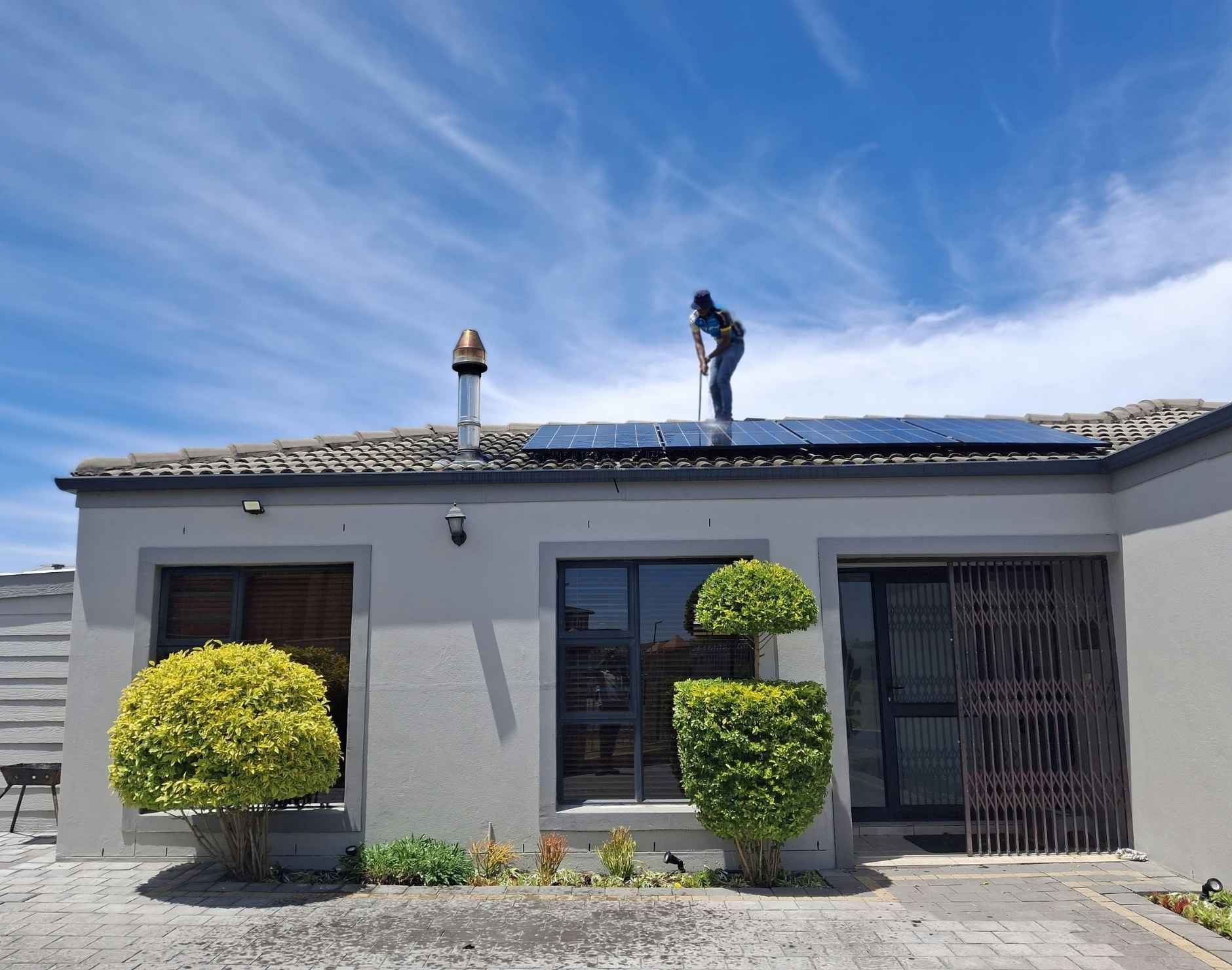
Every roof penetration for a solar mounting foot is a potential water entry point — and in South Florida’s wind-driven rain environment, potential water entry points become actual leak events with a reliability that makes the waterproofing quality of solar mounting penetrations a critical specification decision. The lag bolt penetrations used in most residential solar tile and shingle installations create holes in the roof deck that must be sealed against water intrusion for the 25-year life of the solar system. The sealant products and flashing methods used by most solar installers are not engineered for this performance horizon in Florida’s UV and thermal environment.
The standard solar mounting penetration for a tile or shingle roof uses a flashed mounting foot — a metal base plate with a sealed lag bolt through the roof deck — installed under the tile or shingle and sealed with butyl tape or silicone sealant. The flashing quality and sealant specification at this detail is the determining factor in whether the penetration remains watertight for 5 years or 25. The solar industry’s standard practice of using generic silicone sealant at deck penetrations produces a detail that degrades to leaking within 8 to 12 years under Florida UV conditions.
Roofing contractor must perform all tile penetrations Solar installer lag bolt penetrations on tile roofs void roofing warranties. Require a licensed roofing contractor to perform and warrant all deck penetrations.
Underlayment-integrated flashing at every mount point Surface-applied sealant at deck penetrations fails within 8–12 years in Florida UV. Flashing must integrate with the underlayment system below the tile surface.
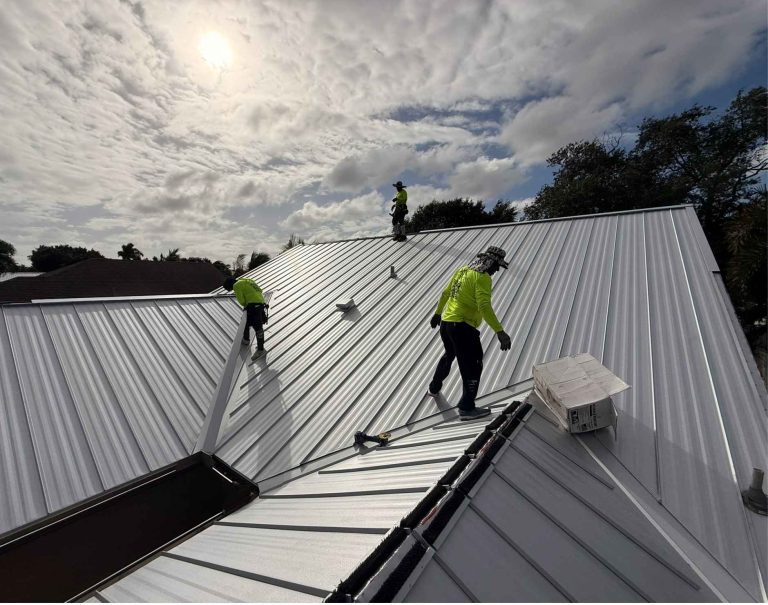
Non-penetrating clamps for standing seam metal S-5 clamp systems attach to the seam without any deck penetration, eliminating the waterproofing challenge entirely. The strongest case for metal roofing before solar.
Verify warranty coverage is maintained in writing Get written confirmation from the roofing manufacturer that the proposed solar mounting method and contractor sequence maintains the active roof warranty.
Wind Load Requirements and Hurricane Code Compliance
Solar panel arrays in Palm Beach County are regulated as roof-mounted structures subject to the full wind load requirements of the Florida Building Code under ASCE 7-22. The 160 mph design wind speed that governs roofing systems in the Tequesta and Jupiter Island coastal corridor applies equally to solar panel racking systems — and the wind load calculation for a solar array is more complex than the calculation for a roof covering because panels present both positive pressure on their lower surface and negative pressure (suction) on their upper surface simultaneously under wind loading.
The critical wind load condition for solar panels in a hurricane environment is the uplift force on the leading edge of the array. Wind flowing under a slightly tilted panel creates a lift force — similar to the aerodynamic lift on an aircraft wing — that must be resisted by the racking system and its attachment to the roof structure. Arrays that are installed at tilt angles optimized for Florida’s solar altitude — typically 10 to 20 degrees from horizontal — experience particularly high uplift forces at their upwind edge during hurricane conditions.
“A solar panel that separates from its racking at 130 mph is not a failed solar system. It is a 40-pound projectile. The wind engineering that prevents this is not optional in Palm Beach County.”
Coordinating Roofing and Solar Contractors
The organizational challenge in solar-on-roof projects is that two separate licensed contractors — a roofing contractor and a solar contractor — must coordinate their scope of work at the interface between their trades without either contractor having authority over the other’s work. Most project failures at this interface occur not because either contractor is incompetent but because the coordination of responsibilities at the roof penetration zone was never clearly defined in writing before work began.
The scope division that produces the best outcomes assigns the roofing contractor responsibility for all deck penetrations, flashing, and sealing work — and assigns the solar contractor responsibility for racking installation above the roof surface, panel installation, and electrical work. This division aligns each contractor’s work with their licensing, their warranty obligations, and their insurance coverage. A roofing contractor who installs and warrants the penetration flashing is accountable for its waterproofing performance. A solar contractor who installs racking above a contractor-flashed mount is accountable for the structural performance of the racking system.
Define scope in writing before either contractor starts The penetration flashing interface must be explicitly assigned in writing to one contractor. Undefined interfaces become disputed liability zones when leaks occur.
Replace first if roof has less than 15 years remaining A 25-year solar system on a 12-year-old roof guarantees a $6,000–$9,000 removal and reinstallation mid-way through the solar system’s life.
Site-specific wind engineering for coastal locations Generic engineering letters are insufficient for Exposure Category D properties. Require a site-specific stamped calculation from a Florida-licensed structural engineer.
Consider standing seam metal for new roof plus solar Non-penetrating clamp systems on standing seam eliminate the entire penetration waterproofing problem. The most future-proof specification for a combined roof-solar project.