In This Article
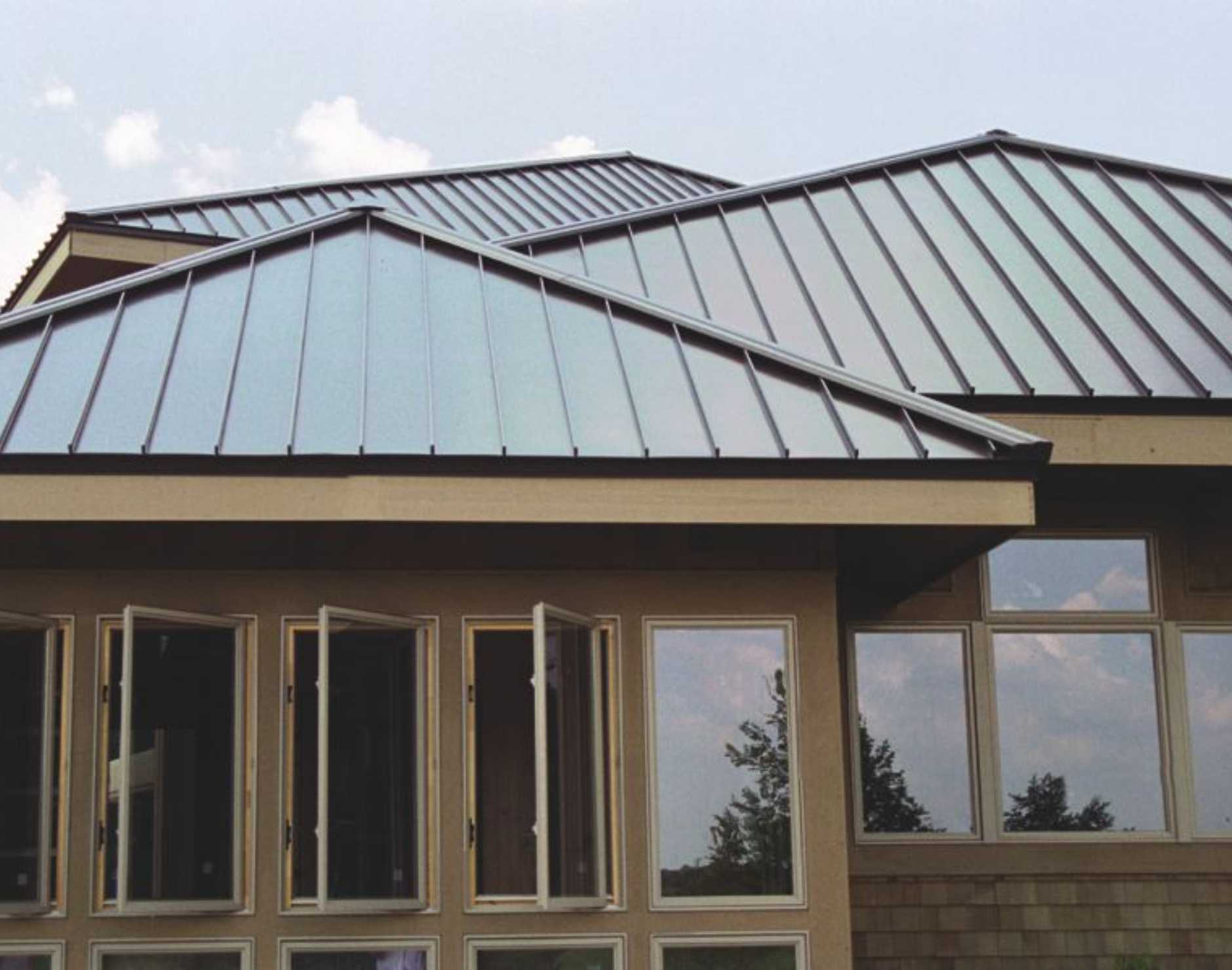
Standing seam metal roofing has moved from a niche architectural choice to the preferred specification for luxury coastal homes in Tequesta, Jupiter Island, and the Palm Beaches — and the reasons go well beyond aesthetics. No other roofing system delivers the same combination of wind uplift resistance, salt corrosion immunity, energy performance, and 50-year service life in the South Florida coastal environment. But standing seam is also the most specification-sensitive roofing system available. The difference between a 50-year roof and a 15-year failure is entirely in the details of gauge, alloy, coating system, seam profile, and clip spacing — details that most homeowners have no way to evaluate independently.
Why Metal Dominates Coastal Florida Luxury
The convergence of Florida’s insurance crisis and its building code evolution has made standing seam metal the economically rational choice for high-value coastal properties in ways that weren’t true a decade ago. When the wind mitigation discount for a Class 4 impact-rated standing seam roof can reduce annual premiums by $8,000–$15,000 on a Jupiter Island or Tequesta estate, the premium cost of metal over tile narrows dramatically — and often reverses when modeled over a 10-year horizon.
The performance case begins with wind uplift. A properly installed standing seam system with concealed clip fastening achieves wind uplift ratings that exceed the ASCE 7-22 160 mph design requirement for coastal Palm Beach County. The concealed clip system — where no fastener penetrates the panel face — eliminates the leak paths that plague exposed-fastener metal systems. Every fastener penetration in an exposed-fastener system is a potential water entry point under the wind-driven rain conditions of a South Florida hurricane event. Standing seam eliminates this failure mode entirely.
“When insurance premium savings are modeled over 10 years, standing seam metal frequently costs less in total than concrete tile — not more. The day-one price premium is the wrong number to evaluate.”
Aluminum vs. Steel: The Coastal Decision
The choice between aluminum and steel for standing seam in the coastal Palm Beach County market is not a close call for properties within the salt spray zone — and yet steel systems are regularly installed on oceanfront and Intracoastal properties by contractors who don’t work primarily in this market. Understanding why aluminum is the correct coastal specification, and what the failure mode of an incorrectly specified steel system looks like, is essential knowledge for any homeowner evaluating proposals.
Aluminum is inherently corrosion-resistant because it forms a stable oxide layer on its surface that prevents further oxidation. This passive oxide layer regenerates if the surface is scratched or abraded — a critical property in a coastal environment where wind-driven salt particles cause constant micro-abrasion of the roof surface. Aluminum’s corrosion resistance does not depend on a coating system remaining intact. Even a compromised Kynar coating on an aluminum panel will not result in corrosion failure.
Aluminum minimum 0.032-inch for coastal residential Thinner gauges flex under wind loading and develop micro-fatigue cracks at seams. 0.040-inch is preferred for low-slope applications.
Kynar 500 coating — not polyester PVDF-based Kynar coatings maintain color stability and chalk resistance for 30+ years. Polyester coatings fade and chalk within 10 years in Florida UV conditions.
Steel only acceptable beyond 1,500 feet from salt water For Tequesta, Jupiter Island, and Intracoastal properties, steel standing seam is not an acceptable coastal specification regardless of coating system.
Aluminum fasteners and clips throughout Galvanic corrosion between dissimilar metals accelerates in salt air. All clips, fasteners, and trim components must be aluminum or stainless steel.
System Specifications That Determine Performance
Standing seam metal roofing performance is determined by four system variables that interact: panel profile, seam height, clip type, and panel width. Each variable affects wind uplift resistance, thermal movement accommodation, and watertightness independently — and suboptimal specification in any one variable degrades the system’s overall performance regardless of material quality.
Seam height is the most critical variable for Florida coastal applications. A minimum 1.5-inch seam height is required for coastal exposure — the seam height determines how much hydrostatic head of water the seam can resist under wind-driven rain conditions. Seams below 1.5 inches are vulnerable to water infiltration at the seam under sustained wind pressures of 80 mph and above. For properties in the highest coastal exposure zones of Tequesta and Jupiter Island, 2-inch seams are our standard specification.
“A 2-inch seam height, floating clip system, and 12-inch panel width is not a luxury upgrade — it is the minimum correct specification for an oceanfront or Intracoastal property in Palm Beach County.”
Installation Standards That Make or Break the System
Standing seam metal roofing is unforgiving of installation errors in ways that tile and membrane systems are not. A misaligned tile can be repositioned. A membrane seam can be re-welded. A standing seam panel that has been incorrectly clipped, improperly seamed, or installed without adequate thermal expansion allowance cannot be corrected without panel replacement. The installation crew’s experience with standing seam specifically — not metal roofing generally — is the single most important quality variable in a standing seam project.
The mechanical seaming process is the most critical installation step. Standing seam panels are field-seamed using an electric seaming machine that rolls the panel edges into a continuous locked seam along the full panel length. An improperly adjusted seaming machine, a machine that is run too fast, or an operator who fails to maintain consistent downward pressure on the machine creates micro-gaps in the seam that are invisible to the eye but allow capillary water intrusion under wind-driven rain conditions.
Require factory-trained seaming machine operators Ask the contractor specifically how many standing seam projects their crew has installed. Generic metal roofing experience is not equivalent to standing seam experience.
High-temperature underlayment is mandatory Specify an underlayment rated to 240°F minimum for metal roofing. Standard residential underlayments are not rated for metal panel surface temperatures.
Same-alloy trim throughout All trim components — eave, rake, ridge, hip, and valley — must be fabricated from the same aluminum alloy as the panels to prevent galvanic corrosion at contact points.
Manufacturer’s installation certification required for warranty Most premium standing seam manufacturers require contractor certification for the full material warranty to be valid. Verify your contractor’s certification before signing.