In This Article
What happens in the 72 hours after a storm damages your roof in Tequesta or Jupiter determines the outcome of your insurance claim more than any other factor — including the severity of the damage itself. Insurance carriers and their adjusters are trained to look for the presence or absence of documented evidence collected immediately after the event. Homeowners who document thoroughly, notify promptly, and protect correctly position their claim for full recovery. Homeowners who delay, document inadequately, or make uninformed decisions in the chaotic hours after a storm routinely receive claim settlements that fall short of the actual cost of restoring their property to pre-storm condition. This guide covers exactly what to do, in what sequence, in the critical 72-hour window.
The First Hours: Safety, Stabilization, and Pre-Documentation
The first priority in the immediate aftermath of storm-related roof damage is personal safety — specifically, assessing whether the structure is safe to enter and occupy. Roof damage that involves structural compromise — visible sagging of the ceiling, cracking or separation of wall-to-ceiling joints, or audible sounds of settling — indicates potential structural failure that requires professional structural assessment before re-entry. In Palm Beach County, the Building Safety Division can be contacted for an emergency structural inspection when structural compromise is suspected. Do not re-enter a home with suspected structural roof damage until a qualified inspector has cleared it.
Once safety is confirmed, the immediate priority shifts to stopping active water infiltration — the emergency tarping step that prevents a storm damage event from becoming an interior flood event. Florida law and most homeowner’s insurance policies require the homeowner to take reasonable steps to prevent further damage after a covered loss. Failure to tarp an exposed roof area — when tarping was reasonably available and the homeowner had the physical ability to arrange it — can give the insurer grounds to reduce the claim settlement by the amount of interior damage that occurred after the storm and that could have been prevented by prompt tarping.
“Photograph everything before any tarping is placed. Emergency tarping that covers undocumented damage creates an evidentiary gap that adjusters are trained to exploit. Document first, protect second — always.”
How to Document Storm Roof Damage Correctly
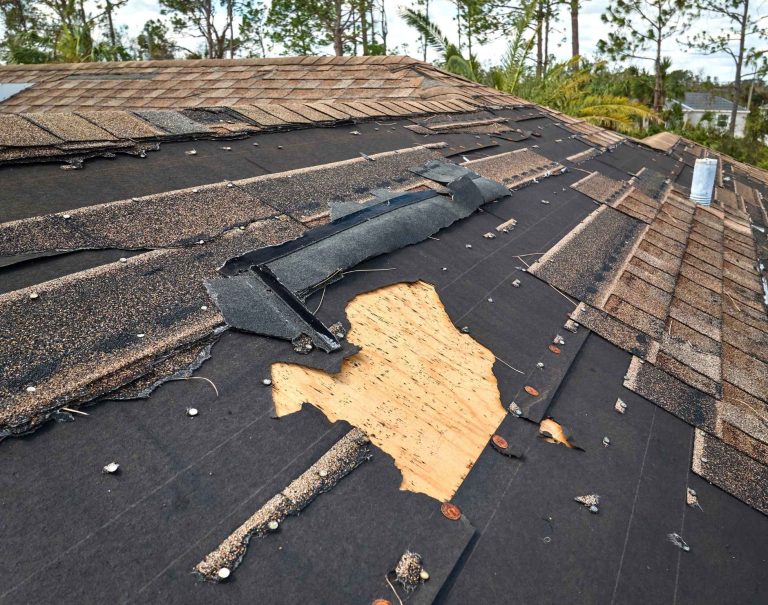
Insurance-quality storm damage documentation requires a systematic approach that captures both the macro-level damage pattern and the specific component-level damage details that adjusters use to scope the repair or replacement cost. A collection of photographs that shows “the roof looks bad” is materially less useful than a documentation package that shows exactly which components are damaged, how they are damaged, and what the damage reveals about the forces that caused it.
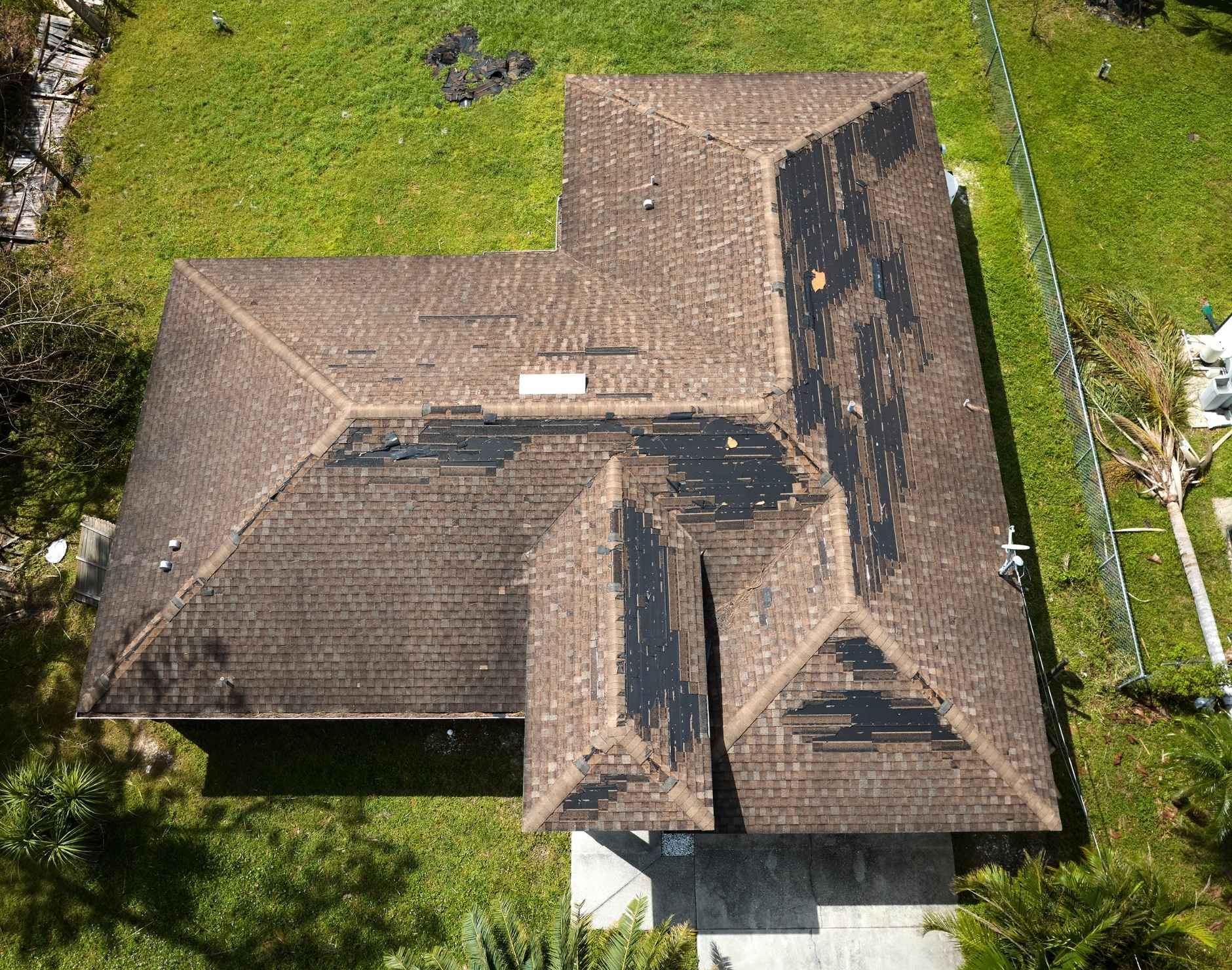
The documentation sequence should move from wide to tight — starting with overview photographs of the full roof from all four elevations, establishing the overall condition and damage pattern, and then progressing to mid-range photographs of specific damaged areas, and finally to close-up photographs of individual component damage. For tile damage, close-up photographs should show cracked tile, displaced tile, missing tile, and any exposed underlayment. For metal roofing, close-up photographs should show dents, bent panels, and any separation at seams or fastener locations. For flat roofing, close-up photographs should show membrane punctures, blistering, and any standing water that indicates drainage disruption.
Photograph from wide to tight — overview, mid-range, close-up Overview shots establish the damage pattern. Mid-range shots identify specific areas. Close-ups document individual component damage. All three levels are necessary for a complete evidentiary record.
Verify phone timestamp and location services before shooting Metadata embedded in smartphone photographs is part of the evidentiary value. Accurate timestamps confirm that documentation occurred immediately post-storm rather than during a later inspection.
Document interior water intrusion before any cleanup Water stains, wet insulation, damaged ceiling finishes, and standing water are interior damage evidence. Cleaning up before photographing eliminates evidence that supports the interior damage portion of your claim.
Create a written log on the day of inspection A contemporaneous written record complements photographic evidence. Note storm date and time, specific observations, protective actions taken, and any witnesses. Retain this with your claim file.
Filing the Insurance Claim: Timing, Process, and Common Mistakes
Florida law requires homeowners to notify their insurer of a property damage claim within a reasonable time after the loss event — and most homeowner’s insurance policies specify a notice requirement of 24 to 72 hours from the time the damage is discovered. Failing to provide timely notice gives the carrier a procedural basis for claim denial or reduction that is entirely separate from the merits of the damage claim itself. Notify your insurer the same day you discover storm damage, even if the full scope of damage is not yet documented.
The initial claim notification should be followed by a written claim submission — either through the carrier’s online portal or by certified mail — that documents the date of loss, the general nature of the damage, the protective measures taken, and the documentation that has been collected. This written submission creates a dated record of claim notification that protects against disputes about whether timely notice was provided. Keep copies of all claim submissions, all correspondence with the carrier, and all documents provided to or received from the adjuster.
“The initial adjuster scope is a starting point, not a final determination. A contractor present during the inspection and a supplemental claim filed afterward are standard tools for ensuring your settlement reflects the actual damage — not just what was visible on the surface.”
Choosing the Right Contractor in a Post-Storm Environment
The post-storm roofing contractor market in Palm Beach County is the most difficult consumer environment in the residential construction industry. In the days and weeks after a significant storm event, the market is flooded with out-of-state contractors — commonly called storm chasers — who follow damage events from state to state and solicit homeowners door-to-door or through aggressive advertising. These contractors are not necessarily incompetent, but they combine several risk factors that make them a poor choice for a Palm Beach County HVHZ roofing project: unfamiliarity with HVHZ requirements, lack of established relationships with Palm Beach County building inspectors, no long-term presence in the local market, and a business model oriented toward volume and speed rather than quality and compliance.
The license verification step described in our post on Florida contractor licensing tiers is especially important in the post-storm environment. A contractor who presents a Florida license number in a post-storm solicitation should be verified at myfloridalicense.com before any agreement is signed. The specific checks in this environment are: confirm the license is CCC or higher for roofing work, confirm the license status is Active rather than Suspended or Expired, confirm the license holder’s name matches the company presenting the proposal, and check for any recent disciplinary actions that might indicate consumer complaints from prior storm work.
Notify your insurer the same day damage is discovered Most policies require notice within 24–72 hours. Delayed notification gives the carrier a procedural basis for claim reduction separate from the damage merits. Call immediately, document the call.
Have a CCC contractor present during the adjuster inspection Adjuster scopes that miss underlying damage can be challenged in real time. A contractor present at the inspection can identify and flag damage that the adjuster would otherwise miss or exclude.
Do not sign an AOB agreement without legal review Assignment of Benefits transfers your claim rights to the contractor. Once signed, you lose visibility and recourse over the settlement process. Consult a Florida insurance attorney before signing any AOB.
Choose a locally established contractor — not a storm chaser Out-of-state operators who arrive after a storm lack HVHZ knowledge and local accountability. The best time to identify your post-storm contractor is before hurricane season — not after your roof is compromised.