In This Article
Hobe Sound occupies a distinctive position in the northern Palm Beach County and southern Martin County coastal market — a community that spans both the barrier island environment of Jupiter Island’s northern extension and the mainland waterfront communities along the western shore of the Indian River Lagoon. This geographic duality means that Hobe Sound properties face meaningfully different roofing environments depending on their specific location, with oceanfront barrier island properties requiring the most demanding marine-grade specifications and mainland Intracoastal properties requiring calibrated coastal specifications that recognize their real but somewhat less intense exposure. For homeowners throughout Hobe Sound, understanding which environment your property occupies — and what that means for roofing material selection, contractor qualifications, and code compliance — is the starting point for every roofing decision.
The Hobe Sound Roofing Environment
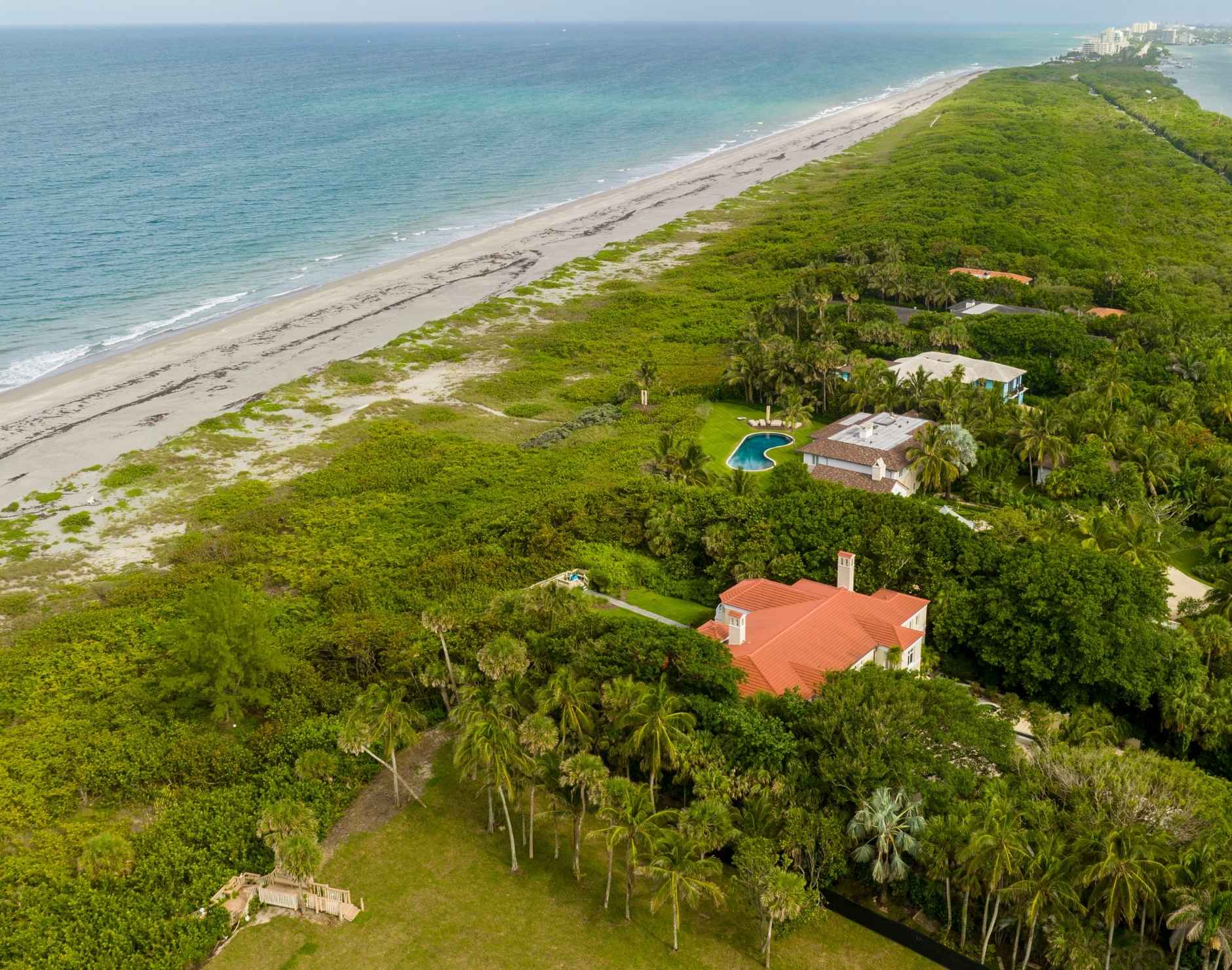
Hobe Sound’s roofing environment is shaped by its position at the northern terminus of the Palm Beach County coastal corridor and its transition into Martin County’s jurisdiction. The community is bounded on the east by the Atlantic Ocean via the barrier island, on the west by the preserved scrub habitat of Jonathan Dickinson State Park, and bisected by the Indian River Lagoon — the broad Intracoastal waterway that separates the barrier island from the mainland. This geography produces two distinct roofing environments within the same community, each with its own exposure classification, material specification requirements, and contractor qualifications.
The entire Hobe Sound area falls within the Florida Building Code’s High-Velocity Hurricane Zone — the same HVHZ classification that applies throughout Palm Beach County and extends into the southern portions of Martin County. This means that all permitted roofing work in Hobe Sound requires Florida Product Approval with HVHZ listing for all components, TAS-compliant installation methods, and the two-fastener-per-tile minimum that distinguishes HVHZ installation from standard Florida Building Code work. Contractors who work in the Martin County markets north of Hobe Sound — Stuart, Port Salerno, Palm City — may not be HVHZ-certified and may not carry HVHZ-listed product approvals in their standard material inventory.
The permit jurisdiction for Hobe Sound properties adds a layer of complexity that homeowners should understand before engaging any contractor. Properties on the barrier island fall within Martin County’s unincorporated jurisdiction. Mainland Hobe Sound properties may fall within Martin County’s unincorporated jurisdiction or, in some areas, within the Town of Jupiter Island’s expanded jurisdiction depending on the specific parcel. Verifying the correct permit jurisdiction for your specific property address before the contractor submits a permit application prevents mid-project complications that can delay inspections and extend project timelines.
Barrier Island vs. Mainland Hobe Sound — The Specification Difference
The exposure difference between Hobe Sound’s barrier island properties and its mainland waterfront properties is significant and has direct consequences for the correct roofing material specification. Understanding this difference — and why it matters for material selection, service life projection, and contractor qualification — allows Hobe Sound homeowners to make roofing decisions calibrated to their property’s actual environment rather than a generic coastal Florida specification.
Barrier island properties in Hobe Sound — those on the Jupiter Island land mass north of the Town of Jupiter Island — face direct Atlantic Ocean exposure on their eastern elevations and Indian River Lagoon exposure on their western elevations. These properties are classified as ASCE 7-22 Exposure Category D for both primary elevations, with the eastern oceanfront elevation experiencing the maximum salt aerosol concentration, wave action noise vibration, and wind-driven spray that characterizes direct Atlantic exposure. The specification requirements for these properties mirror those for Jupiter Island’s oceanfront estates: marine-grade aluminum alloys or Type 316 stainless for all metal components, PVDF-coated surfaces throughout, and the most conservative available interpretation of every HVHZ installation requirement.
Mainland Hobe Sound properties — those west of the Indian River Lagoon on the mainland side of US-1 and in the Bridge Road and Gomez Road corridors — face a different and somewhat less intense exposure. These properties are typically classified as Exposure Category D for elevations facing the Intracoastal, and Exposure Category C for elevations facing inland. The salt aerosol concentration at mainland Hobe Sound properties is meaningfully lower than at barrier island properties, and the wind exposure from the prevailing southeast is partially attenuated by the barrier island and the vegetation that characterizes Hobe Sound’s low-density development pattern. This difference in exposure translates to a roofing material specification that uses aluminum throughout for all metal components but does not require the marine-grade Type 316 stainless specifications that are appropriate for direct oceanfront exposure.
Barrier island: Type 316 stainless fasteners and PVDF coating throughout Direct Atlantic and Intracoastal dual exposure requires marine-grade specification for every metal component. The same standards that apply to Jupiter Island oceanfront estates; apply to Hobe Sound barrier island properties.
Mainland waterfront: aluminum throughout, standard HVHZ specification Lower salt concentration than barrier island properties. Aluminum alloy for all metal components and standard HVHZ-compliant products are appropriate. Type 316 stainless is still preferred for Intracoastal-facing flashing locations.
Verify permit jurisdiction before contractor submits application Martin County unincorporated and Town of Jupiter Island jurisdictions have different permit processes. Confirming the correct jurisdiction for your specific parcel prevents mid-project delays and inspection complications.
HVHZ required throughout — including mainland properties All of Hobe Sound falls within the HVHZ. Contractors whose standard work is in non-HVHZ Martin County markets may not carry HVHZ-listed products. Verify HVHZ compliance explicitly in every proposal.
Material Selection for Each Hobe Sound Zone
The material selection framework for Hobe Sound roofing projects follows the exposure zone classification established in the previous section — with the barrier island requiring the most demanding marine-grade specifications and the mainland waterfront requiring calibrated coastal specifications that are rigorous but appropriately scaled to the actual exposure conditions. Understanding the correct specification for each zone allows Hobe Sound homeowners to evaluate contractor proposals with the knowledge needed to identify both over-specification that adds unnecessary cost and under-specification that creates performance risk.
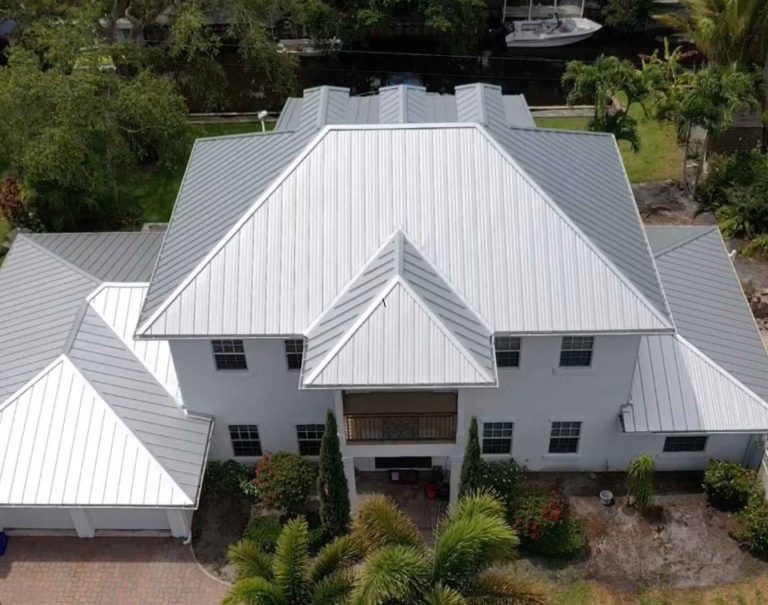
For the barrier island zone, standing seam Kynar-coated aluminum is the primary roofing specification that maximizes every performance dimension — wind resistance, salt corrosion resistance, service life, and solar compatibility — simultaneously. The architectural character of Hobe Sound’s barrier island estates varies from traditional Florida vernacular to contemporary minimalist, and standing seam aluminum’s profile flexibility — available in 12-inch to 18-inch panel widths and multiple seam heights — accommodates the aesthetic range of the island’s architectural program. Terracotta tile in an HVHZ-approved profile is the correct specification for barrier island properties where Mediterranean or Spanish Colonial architecture requires natural clay materials for authentic expression.
For mainland Hobe Sound waterfront properties, concrete tile with factory-applied polymer coating is a cost-effective and performance-appropriate specification that provides the aesthetic continuity with the broader Hobe Sound community’s dominant tile character while meeting HVHZ wind resistance requirements. The polymer coating addresses the biological resistance limitation of uncoated concrete tile in the coastal environment — reducing the cleaning frequency from the 4 to 7-year cycle that uncoated tile requires to the 7 to 10-year cycle that coated tile achieves in moderate coastal exposure. Standing seam aluminum is equally appropriate for mainland properties where the architectural style accommodates it and the budget supports the premium.
What to Look for in a Hobe Sound Roofing Contractor
Hobe Sound’s combination of HVHZ jurisdiction, Martin County permit process, dual exposure zone geography, and architecturally distinctive property stock creates a contractor qualification profile that eliminates many contractors who work competently in other South Florida roofing markets. The homeowner who evaluates contractors for a Hobe Sound project using the same criteria they would apply in Palm Beach Gardens or Boca Raton — license status, general reviews, price comparison — will systematically select from a pool that excludes some of the most qualified candidates and includes some of the least qualified.
The first qualification is HVHZ experience — specifically, demonstrated experience pulling Martin County permits for HVHZ-compliant projects. A contractor whose portfolio is entirely in the non-HVHZ portion of Martin County — Stuart, Palm City, Jensen Beach — has not worked in the HVHZ environment that applies to Hobe Sound. Request the permit numbers for at least three HVHZ-compliant Martin County projects completed within the past three years. Verify those permit numbers through Martin County’s online permit search portal. A contractor who cannot provide these references is not a qualified Hobe Sound contractor regardless of how impressive their portfolio appears in other markets.
The second qualification is exposure zone knowledge — the ability to correctly classify your property’s exposure zone, explain the material specification implications of that classification, and provide a proposal that reflects the correct specification for your property rather than a generic coastal Florida standard. The questions to ask are specific: What ASCE 7-22 Exposure Category applies to my property? What stainless steel grade do you specify for this location and why? What is the minimum flashing gauge you propose and why? A contractor who can answer these questions precisely and correctly has done the site analysis and material knowledge work that Hobe Sound projects require.
Require documented HVHZ permit history in Martin County specifically Non-HVHZ Martin County experience does not qualify a contractor for Hobe Sound work. Verify permit numbers through Martin County’s online portal — not through the contractor’s self-reported project list.
Test exposure zone classification knowledge before accepting any proposal Ask specifically about your property’s ASCE 7-22 Exposure Category and the material specification implications. A contractor who cannot answer or who gives a generic response has not analyzed your specific site conditions.
Require FPA numbers for every component in the proposal A Hobe Sound roofing proposal without FPA numbers is not HVHZ-compliant documentation. Every component — tile or panel, underlayment, fasteners, metal edge — requires an individual HVHZ-listed FPA number in the proposal.
Choose a Tequesta-based contractor who serves the full northern corridor A contractor based in and primarily serving the Tequesta-to-Hobe-Sound corridor has the daily permit relationships, material supplier access, and exposure zone familiarity that Hobe Sound projects require — without the learning curve of a contractor entering the market for the first time.