In This Article
Every tile roof in Palm Beach County built or re-roofed after 2002 is required to have a secondary water barrier — a continuous layer of self-adhering polymer-modified bitumen applied directly to the roof deck before any other component is installed. This requirement exists because post-hurricane investigation repeatedly documented the same failure pattern: tile roofs that lost tile during the storm but then experienced catastrophic interior water damage not from the missing tile itself, but from rain penetrating through the felt underlayment that was exposed when tile was gone. The secondary water barrier is the code-mandated solution — a layer whose entire purpose is to protect the interior if the primary roof covering is partially lost during a hurricane event.
What the Secondary Water Barrier Is and Why It Exists
The secondary water barrier — the SWB — is a self-adhering polymer-modified bitumen sheet applied directly to the structural roof deck before the installation of any tile, felt, or other roofing component. It is not the primary waterproofing layer of the finished roof system — that function is served by the tile above. It is a backup waterproofing layer whose performance is evaluated specifically under the condition that the primary covering has been partially or fully removed by hurricane wind forces.
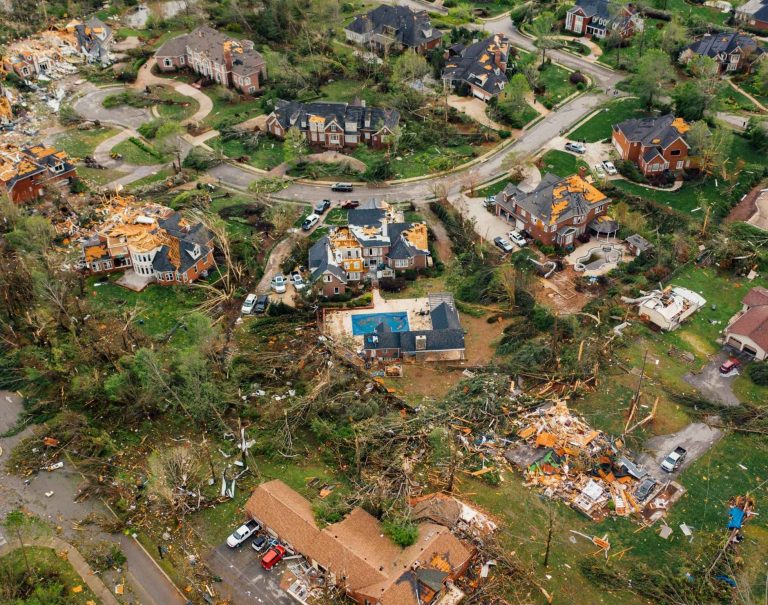
The engineering case for the SWB was built on post-Andrew and post-Charley investigation data that documented a consistent and preventable failure pattern. When tile roofs lost tile during hurricane events, the exposed underlayment — typically two layers of number 30 felt — was subjected directly to wind-driven rain. Standard felt underlayment does not provide sustained waterproofing resistance under the combination of wind pressure and water infiltration that occurs during a hurricane. Water penetrated through the felt within minutes of tile loss, flooding the attic space and living areas below with losses that often exceeded the insured value of the roof replacement itself.
“A tile roof with an SWB can lose significant tile in a hurricane and remain dry inside. A tile roof with only felt can begin taking water within minutes of tile loss. That difference is the entire reason the SWB requirement exists.”
Florida’s SWB Mandate and Its Legislative History
Florida’s secondary water barrier requirement was first enacted in the 2001 Florida Building Code and applies to all tile roofing installed in permit-required projects after the 2001 code adoption date. Homes built before 2002 in Palm Beach County almost certainly do not have a code-compliant SWB — they were built under pre-SWB requirements that permitted felt-only underlayment systems for tile roofing.
The critical question for pre-2002 homeowners is whether a subsequent re-roofing project has triggered the SWB requirement. Any re-roofing project replacing more than 25% of the roof area within a 12-month period — which includes every full replacement — triggers full code compliance, meaning the SWB must be installed as part of the project regardless of what was originally installed.
Required for all tile roofing permitted after 2001 Every full roof replacement triggers full code compliance — meaning SWB installation is required regardless of what was originally under the existing tile.
Pre-2002 homes almost certainly lack a compliant SWB These homes have felt-only underlayment. They were compliant when built — but they lack the storm performance protection the SWB provides.
Citizens Insurance requires SWB documentation Florida’s insurer of last resort has specific SWB documentation requirements for tile roof eligibility. Private insurers are increasingly following suit.
2023 FBC strengthened SWB installation prescriptions Minimum performance standards, lap dimensions, and termination details are now explicitly prescribed — leaving less discretion to the installer than any prior code edition.
Compliant Secondary Water Barrier Materials
The Florida Building Code specifies that the secondary water barrier must be a self-adhering polymer-modified bitumen sheet meeting ASTM D 1970 — the standard specification for self-adhering polymer-modified bituminous sheet materials used as steep-slope roofing underlayment. This standard defines minimum physical properties including tensile strength, elongation, peel adhesion, and low-temperature flexibility.
Within ASTM D 1970-compliant products, SBS-modified bitumen with film surfacing is the most common SWB specification for Florida coastal applications. The SBS modifier maintains flexibility at the temperature extremes experienced in South Florida attics, and smooth surfacing allows subsequent underlayment layers to slide slightly during thermal expansion without bonding to the SWB surface.
“ASTM D 1970 compliance alone is not sufficient for Palm Beach County SWB installation. The product must also carry a current HVHZ Florida Product Approval specifying the installation requirements the building inspector will verify at the dry-in inspection.”
Installation Requirements and the Dry-In Inspection
The SWB installation requirements cover four critical variables: deck preparation, lap dimensions, termination details at all roof edges and penetrations, and sequencing relative to other underlayment components. A gap or discontinuity in any of these details creates a potential water infiltration path that defeats the SWB’s purpose.
Deck preparation is the most commonly neglected requirement. The SWB must bond directly to a clean, dry, debris-free deck surface — and in some cases a primed surface depending on the FPA requirements. Any deck panel replacement must be complete before SWB installation begins. New panels accept adhesive more readily than aged panels, and the transition zone between new and old panels requires careful application technique.
Deck must be clean and dry before SWB installation Contamination and moisture prevent the adhesive bond required for rated performance. Complete all deck repairs before SWB installation begins.
Minimum 6-inch end laps, fully adhered Laps must be seated under pressure to fully engage the adhesive. Temperature and contamination both affect adhesion quality — inspect lap edges for fish mouths before proceeding.
The dry-in inspection is the only independent quality gate Once tile is installed the SWB is permanently concealed. Confirm the inspection date with your contractor and request the certificate at project completion.
Keep the SWB product FPA and installation documents The SWB product’s FPA number and the installation certificate are what insurers require to confirm SWB compliance. These belong in your permanent roofing documentation package.