In This Article
Jupiter Island is one of the most demanding roofing environments in the continental United States — a narrow barrier island where Atlantic oceanfront exposure on one side and Intracoastal Waterway exposure on the other combine to create salt aerosol concentrations, wind pressure conditions, and storm surge risk that exceed virtually every other residential roofing environment in Florida. The estates that line both sides of South Beach Road represent some of the highest-value residential properties in the state, and their roofing systems bear a correspondingly outsized responsibility for protecting the structures and contents beneath them. For property owners on Jupiter Island, understanding exactly what the combination of HVHZ code requirements, Exposure Category D classification, and direct oceanfront salt exposure demands of a roofing system is the foundation of every specification and contractor selection decision.
Why Jupiter Island Is a Different Roofing Environment
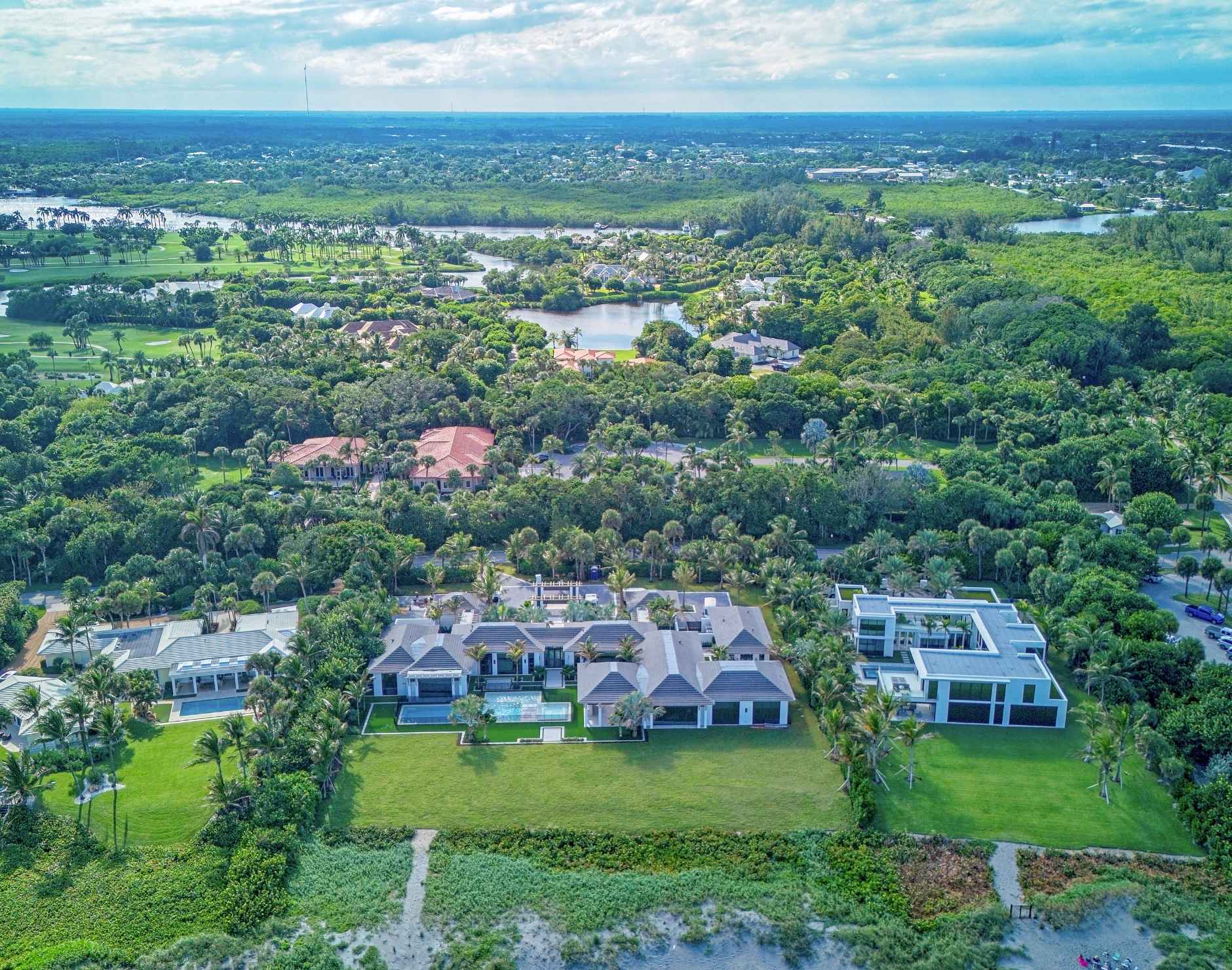
Jupiter Island sits at a geographic intersection that concentrates every roofing challenge the South Florida coastal environment presents into a single, narrow strip of land. The island’s Atlantic-facing eastern properties experience direct ocean exposure — wave action, wind-driven spray, and airborne salt aerosol from an unobstructed fetch that extends eastward for thousands of miles. The western-facing Intracoastal properties experience a different but equally demanding exposure from the open water of the Indian River Lagoon, combined with the prevailing southeast winds that carry Atlantic salt aerosol across the island’s full width on most afternoons.
The practical consequence is that virtually every property on Jupiter Island falls within ASCE 7-22 Exposure Category D — the highest coastal exposure classification — for both the Atlantic-facing and Intracoastal-facing elevations. Exposure Category D designation applies within approximately 1,500 feet of open water bodies wider than 5,000 feet, and Jupiter Island’s maximum width of approximately 800 feet means the entire island is Exposure Category D from ocean to bay. The design wind pressures calculated for Category D structures at the island’s 160 mph ASCE 7-22 design wind speed are among the highest applied to residential construction anywhere in the country.
The island’s development pattern adds architectural complexity to the technical specification challenge. Jupiter Island estates range from historic Mediterranean Revival and Spanish Colonial properties built in the 1920s through 1960s — many without the structural upgrades that current code requires — to contemporary oceanfront compounds built to current HVHZ standards. The historic estates present the most demanding roofing projects: structural assessments of original framing, often inadequate for current wind load requirements; original galvanized flashing systems that have reached end of their coastal service life; and original tile or slate systems that carry historical and aesthetic significance to the property’s character and value.
HVHZ Requirements for Jupiter Island Estate Properties
Every roofing project on Jupiter Island is subject to the full High-Velocity Hurricane Zone requirements of the Florida Building Code — including mandatory Florida Product Approval with HVHZ listing for all roofing components, TAS-tested product performance, and two-fastener minimum tile installation. These requirements apply to all permitted roofing work regardless of the property’s age, historical status, or the scope of the project. A like-for-like tile replacement on a 1940s Mediterranean estate on Jupiter Island requires the same HVHZ compliance documentation as a complete new roofing system on a contemporary construction.
The permit process for Jupiter Island roofing projects involves both the Martin County Building Division — Jupiter Island falls within Martin County — and in some cases the Town of Jupiter Island’s building review process for properties within the town’s jurisdiction. The Martin County Building Division enforces the Florida Building Code including all HVHZ requirements. Contractors who primarily work in Palm Beach County and are unfamiliar with Martin County’s permit process and inspector relationships may experience delays and complications on Jupiter Island projects that an experienced local contractor navigates without issue.
The wind pressure calculations for Jupiter Island estates frequently require site-specific engineering rather than prescriptive code compliance pathways — particularly for large-footprint estates, complex multi-level roof geometries, and properties where the combination of building height, coastal exposure, and roof configuration produces design pressures at the upper end of the prescriptive tables. An experienced contractor working on Jupiter Island will have established relationships with local structural engineers who understand the island’s specific exposure conditions and can produce the site-specific pressure calculations and stamped engineering documentation that complex Jupiter Island projects require.
Full HVHZ compliance required for all permitted work — no age exemptions Historic estate status does not exempt Jupiter Island properties from current HVHZ requirements. Every permitted roofing project requires HVHZ-listed FPA numbers for all components and TAS-compliant installation.
Martin County jurisdiction — permit process differs from Palm Beach County Jupiter Island falls within Martin County. Contractors primarily working in Palm Beach County may not be familiar with Martin County’s permit process. Verify your contractor’s active Martin County permit history before engaging.
Site-specific engineering often required for large or complex estates Prescriptive code compliance pathways may not apply to multi-level estates with complex roof geometries. Site-specific pressure calculations and stamped engineering documentation are standard requirements for Jupiter Island’s larger properties.
Maximum wind mitigation ratings worth $15,000–$30,000 annually on premium estates The premium differential between maximum and minimum ratings at Jupiter Island insurance market premiums is among the largest available anywhere in Florida. Complete HVHZ re-roofing pays back through insurance savings rapidly.
Material Specification for Oceanfront Exposure
The material specification for a Jupiter Island roofing project must account for the most aggressive salt exposure environment in the regional roofing market. Standard HVHZ-compliant materials that perform acceptably on inland Palm Beach County properties may underperform significantly on Jupiter Island’s direct oceanfront in ways that are not reflected in the Florida Product Approval ratings — which are tested under standardized conditions rather than the specific salt concentration and wind-driven spray exposure of the island’s oceanfront elevations.
For metal roofing applications on Jupiter Island — the specification that provides the combination of maximum wind resistance, longest service life, and solar compatibility that premium estates increasingly demand — the minimum specification is Kynar 500 PVDF-coated aluminum with Type 316 stainless steel fasteners throughout. Standard galvanized or even standard 304 stainless fasteners are inadequate for Jupiter Island’s direct ocean exposure — the chloride concentration at the oceanfront exceeds the threshold that causes pitting corrosion in 304 stainless within 5 to 10 years. Type 316 stainless, with its molybdenum content that dramatically improves chloride resistance, is the correct specification for every metal component on Jupiter Island oceanfront properties.
For tile roofing applications — still the dominant aesthetic on Jupiter Island’s Mediterranean and Spanish Colonial estates — the material specification must address both wind resistance and biological resistance at a level appropriate for direct ocean exposure. Clay terracotta tile in an HVHZ-approved barrel or flat profile, installed with a two-fastener-per-tile minimum and foam adhesive supplementation in all corner and edge zones, provides the combination of architectural authenticity and structural performance that Jupiter Island estate owners require. The underlayment specification should always include a self-adhering SWB of the highest available quality — on Jupiter Island, the SWB may need to resist sustained wind-driven rain at the design wind speed for a period that coastal conditions can extend well beyond the duration assumed in laboratory testing.
Choosing the Right Contractor for Jupiter Island
The contractor selection criteria for a Jupiter Island roofing project are more demanding than for most other residential roofing markets — and the consequences of choosing incorrectly are more severe. The combination of high property values, extreme exposure conditions, complex permit jurisdiction, and discerning ownership that characterizes the Jupiter Island market requires a contractor with specific experience, specific license credentials, and a specific level of material and technical knowledge that a generalist contractor — even a licensed and competent one — may not possess.
The Florida CCC roofing contractor license is the minimum credential for a Jupiter Island roofing project. Beyond the license, the contractor should have documented experience with Martin County permits specifically — Jupiter Island is not Palm Beach County, and the permit process, inspector relationships, and code interpretation that an experienced Martin County roofing contractor takes for granted are genuine obstacles for contractors without this experience. Ask specifically for the permit numbers of recent Jupiter Island or Martin County roofing projects, and verify those permits through Martin County’s online permit portal.
The material specification knowledge required for Jupiter Island projects is a genuine differentiator between contractors. A contractor who does not know the difference between Type 304 and Type 316 stainless steel, who cannot explain why PVDF coating is specified over polyester in direct ocean exposure, or who proposes galvanized flashing on an oceanfront property is telling you exactly what level of attention your project will receive. These are not esoteric knowledge requirements — they are baseline competencies for any contractor who regularly works in the direct ocean exposure environment that Jupiter Island presents on every project.
Verify active Martin County permit history — not just Florida license status A Florida CCC license authorizes work in Martin County but does not demonstrate Martin County experience. Request permit numbers from recent Martin County projects and verify them in the county portal before engaging any contractor.
Test material specification knowledge before accepting any proposal Ask specifically about stainless steel grade, PVDF vs polyester coating, and the reason for any material upgrade over standard HVHZ minimums. A contractor who cannot answer these questions has not done Jupiter Island oceanfront work before.
Require a full specification document — FPA numbers for every component A Jupiter Island roofing proposal without FPA numbers for tile, underlayment, fasteners, and metal edge systems is not a specification — it is an estimate. Jupiter Island projects require specification-level documentation before any contract is signed.
Plan wind mitigation documentation as part of the project from day one The $15,000–$30,000 annual insurance premium savings from maximum wind mitigation ratings on a Jupiter Island estate are only captured if the installation is properly documented and the post-project wind mitigation inspection is scheduled and filed promptly.