In This Article
The choice between metal and tile roofing is the most consequential material decision a Tequesta luxury homeowner makes — not because one is universally superior to the other, but because the correct answer depends on a specific combination of variables that are unique to each property: architectural style, coastal exposure zone, structural framing capacity, holding horizon, solar energy plans, and the insurance premium dynamics of the current Florida market.
Getting this decision right produces a roofing system that serves the property for 40 to 60 years at maximum performance. Getting it wrong — choosing tile where metal is structurally and financially superior, or choosing metal where tile is architecturally correct — produces a system that either underperforms its environment or misrepresents its architecture. This guide provides the Tequesta-specific framework for making this decision correctly.
The Tequesta Climate Context — Why This Comparison Is Different Here
The metal vs. tile comparison in Tequesta is categorically different from the same comparison in any non-coastal Florida market — and different again from the comparison in coastal markets further south or further north. Tequesta’s specific combination of the High-Velocity Hurricane Zone designation, Intracoastal and river salt exposure, 160 mph ASCE 7-22 design wind speed, and the Florida insurance market’s current premium structure creates a set of performance and financial criteria that make both materials more demanding to specify correctly and more consequential to get right.
Both metal and tile roofing systems, when correctly specified and installed to HVHZ standards in Tequesta’s coastal environment, perform admirably against the climate’s primary stressors — hurricane wind uplift, wind-driven rain infiltration, and salt air corrosion. The difference between them in Tequesta is not a question of which one survives the climate but which one is optimized for the specific combination of performance demands, aesthetic requirements, insurance implications, and lifecycle economics that each individual Tequesta property presents.
The insurance dimension makes the Tequesta comparison particularly distinct. Florida’s homeowner’s insurance market has evolved to treat roofing material and age as primary underwriting variables — and the OIR-B1-1802 wind mitigation form’s Section A rating, which reflects the roof covering material and its HVHZ compliance status, produces different insurance premium implications for metal and tile that are significant enough to factor into the material selection decision explicitly. A standing seam metal system typically achieves the highest available Section A rating from its day of installation and maintains it for the system’s full service life without degradation. A tile system’s Section A rating depends on installation method and product approval — both of which are controllable through correct specification — but tile systems generally achieve equivalent Section A ratings when correctly installed.
Head-to-Head Performance Comparison in Tequesta’s Environment
Comparing metal and tile roofing performance across the specific dimensions that matter most in Tequesta’s coastal HVHZ environment reveals consistent advantages for each material in different categories — a pattern that confirms the decision is genuinely property-specific rather than categorically favoring one system over the other.
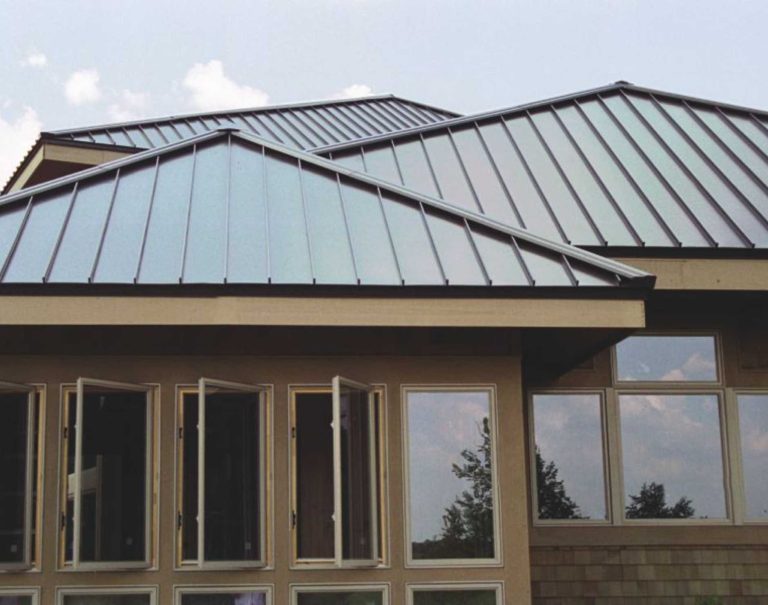
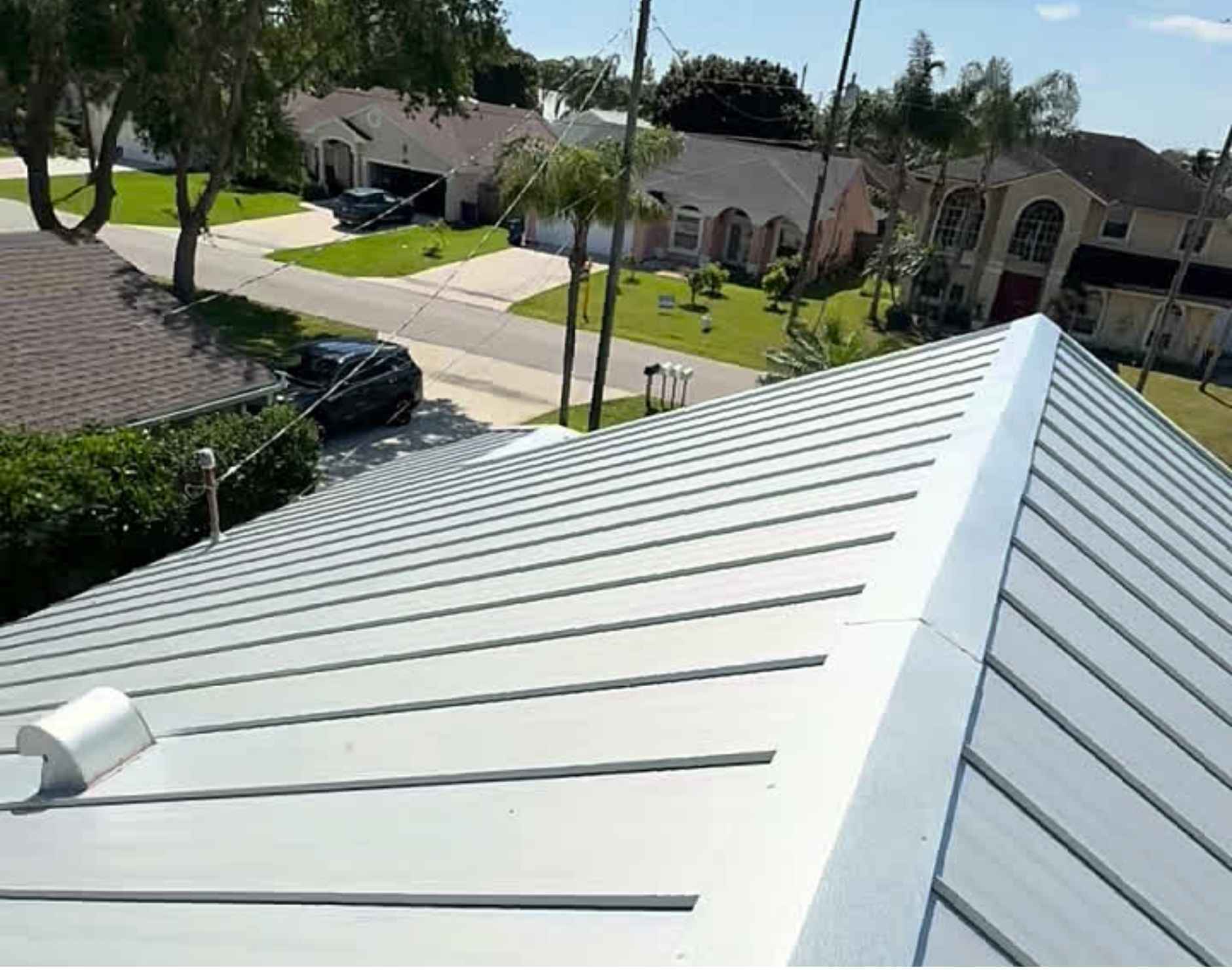
Wind resistance is the primary structural performance category in the HVHZ context. Both standing seam metal and correctly installed HVHZ tile achieve the wind uplift resistance required for Tequesta’s 160 mph design wind speed — the distinction is in how they achieve it and how that resistance behaves over the system’s life. Standing seam metal’s concealed clip system provides engineered, verifiable uplift resistance that does not degrade over time — the clip rating is a measured mechanical property of the clip-panel-substrate connection that remains constant. HVHZ tile’s uplift resistance is a function of the fastening and foam adhesive installation, which is correct at installation but which the tile’s mechanical fastener and adhesive bond can be stressed by repeated wind cycling over decades. Both systems perform well in single event testing; the metal system’s resistance mechanism is less susceptible to fatigue over a long service life of repeated wind exposure.
Salt corrosion resistance strongly favors correctly specified metal over tile in Tequesta’s direct waterfront exposure zones. Kynar-coated aluminum standing seam in direct Zone 1 salt spray exposure will maintain its surface integrity and corrosion resistance for 40-plus years with essentially zero maintenance. Tile in the same exposure zone requires biological cleaning every 5 to 8 years — the salt-humid coastal environment accelerates algae and lichen establishment on the tile surface even with polymer coating — and the cleaning process involves pressure washing that gradually depletes the surface coating over successive cycles. Over a 40-year period, the total maintenance cost differential between metal and tile in Zone 1 Tequesta exposure is meaningful.
Thermal performance — the contribution of the roofing system to interior cooling load — modestly favors tile in the traditional analysis. Tile’s thermal mass slows heat transfer through the roof assembly, and the air gap between the tile and the underlayment provides additional thermal resistance. Metal roofing conducts heat more readily, though Kynar-coated metal in light colors reflects a higher percentage of solar radiation than dark tile — partially or fully offsetting the thermal mass advantage depending on color selection. In Tequesta’s hot climate, the practical energy performance difference between a reflective metal roof and a medium-colored tile roof is smaller than the traditional comparison suggests and is readily analyzed for any specific property.
Wind resistance: both systems achieve HVHZ compliance — metal’s mechanism is more fatigue-resistant Standing seam’s engineered clip resistance does not degrade over repeated wind cycling. Both systems perform in a single event; metal has the structural advantage over decades of repeated exposure.
Salt corrosion: metal wins in Zone 1 direct exposure — zero maintenance vs. 5–8 year cleaning cycles Kynar-coated aluminum in direct salt spray requires no maintenance for 40-plus years. Tile in the same exposure needs regular biological cleaning that depletes surface coatings over successive cycles. The maintenance cost differential is real and cumulative.
Thermal performance: tile has thermal mass advantage — metal’s reflectivity narrows the gap Tile’s thermal mass slows heat transfer. Light-colored Kynar metal’s high solar reflectance partially offsets this. The practical energy performance difference is smaller than commonly assumed and property-specific.
Long-term water resistance: metal wins — zero panel face penetrations vs. underlayment-dependent tile Standing seam has no fasteners, washers, or sealant joints on the panel surface. Tile relies on underlayment condition that degrades over decades. For long-hold Tequesta properties concerned about leak risk, metal’s water resistance mechanism is structurally superior.
Cost and Lifecycle Economics in the Tequesta Market
The cost comparison between metal and tile roofing in Tequesta must be made on a lifecycle basis — total cost of ownership over the expected service life of each system — rather than on installed cost alone. An installed cost comparison that shows tile as less expensive than standing seam metal is accurate but incomplete: it captures the upfront cost differential while omitting the maintenance cost differential, the service life differential, and the insurance premium differential that together determine which system costs less over a 40-year holding horizon.
Installed cost for a quality standing seam aluminum system with Kynar coating on a typical Tequesta luxury home — 3,000 to 5,000 square feet of roof area — runs $25 to $45 per square foot installed, producing total project costs of $75,000 to $225,000 depending on roof complexity. A quality HVHZ concrete or terracotta tile installation on the same home runs $18 to $32 per square foot installed, producing total costs of $54,000 to $160,000. The installed cost differential — $20,000 to $65,000 depending on project scope — represents the upfront premium for metal.
The lifecycle comparison substantially narrows this differential. A Kynar-coated standing seam system has a realistic service life of 50-plus years with zero maintenance beyond annual inspections — no cleaning, no recoating, no sealant reapplication. A tile system in Tequesta’s coastal environment has a realistic service life of 25 to 35 years — with biological cleaning every 5 to 8 years at $1,500 to $3,000 per cleaning, and one complete re-roofing project within a 50-year horizon. Over 50 years, the tile system’s total cost — initial installation plus maintenance plus re-roofing — approaches or exceeds the standing seam system’s single upfront installation cost, making the lifecycle economics roughly equivalent for Zone 2 and Zone 3 Tequesta properties.
The Decision Framework for Tequesta Homeowners
The metal vs. tile decision for a Tequesta luxury home is best approached through a sequential framework that evaluates the most determinative factors first and uses each factor’s answer to narrow the decision space before reaching the final choice. Working through this framework systematically — rather than starting with cost or with material preference — produces a decision that is grounded in the property’s specific conditions rather than in general market preferences.
The first filter is architectural authenticity. If the home’s architecture is a Mediterranean Revival, Spanish Colonial, or Italianate style where the roof form and tile profile are integral to the building’s authentic expression — where terracotta tile is not just a preference but an architectural requirement — the decision may be resolved at this step. Replacing the architecturally correct terracotta tile on a historic Mediterranean estate with standing seam metal would be a specification decision that compromises the property’s character and potentially its appraised value in the luxury market. For these properties, tile is the correct answer regardless of the performance comparison.
The second filter is structural framing capacity. For re-roofing projects on existing structures, the current framing’s capacity to support the proposed roofing system’s dead load must be verified before any material specification is finalized. Metal is substantially lighter than tile — standing seam aluminum at approximately 1 to 1.5 pounds per square foot versus concrete tile at 9 to 10 pounds and terracotta at 12 to 15 pounds. For properties currently roofed with concrete tile where the owner is considering a material change, metal is always structurally feasible — the weight reduction actually increases structural margin. For properties currently roofed with a lighter material where terracotta is desired, a structural review is required.
The third filter is coastal exposure zone. For Zone 1 direct waterfront properties — Intracoastal frontage, lower Loxahatchee River, Jupiter Inlet Colony, Jupiter Island — the lifecycle economics and maintenance differential consistently favor metal, and the solar integration advantage is most relevant at these property values. For Zone 2 and Zone 3 properties where the maintenance differential is smaller, the architecture and aesthetic preference can drive the decision more freely without the lifecycle economics tilting decisively toward metal.
Filter 1: Architectural authenticity — Mediterranean and Spanish Colonial call for tile For architecturally significant styles where tile is intrinsic to the building’s authentic expression, tile is correct regardless of the performance comparison. Architecture is the first filter — performance and economics follow.
Filter 2: Structural capacity — metal is always feasible, terracotta requires framing verification Metal’s weight advantage makes it structurally feasible on any existing framing. Terracotta’s higher weight on framing designed for concrete tile requires a structural engineer’s review before specification.
Filter 3: Zone 1 waterfront exposure consistently favors metal on lifecycle economics Intracoastal, lower Loxahatchee River, Jupiter Island, and Jupiter Inlet Colony properties face maintenance and service life conditions that make metal’s lifecycle economics compelling versus tile’s accumulating maintenance cost.
Filter 4: Long hold + solar plans = standing seam every time 15-plus year holding horizon combined with solar panel plans makes standing seam the clear choice — non-penetrating solar integration, maximum lifecycle economics, and the highest long-term insurance and resale positioning available.