In This Article
The Loxahatchee River corridor through Tequesta and northern Palm Beach County is one of the most environmentally distinctive residential waterfront settings in South Florida — a federally designated Wild and Scenic River flanked by preserved natural habitat, navigable for miles into the Everglades headwaters, and home to estate properties that have made a conscious choice to live within a natural system rather than apart from it. Roofing these properties correctly requires a contractor who understands not just the technical requirements of the HVHZ but the specific exposure conditions the river creates, the aesthetic sensitivity these properties demand, and the practical reality that the river’s natural character masks a genuine coastal salt exposure that makes material specification as important here as it is on the more obviously demanding waterfront communities to the east.
The Loxahatchee River Roofing Environment
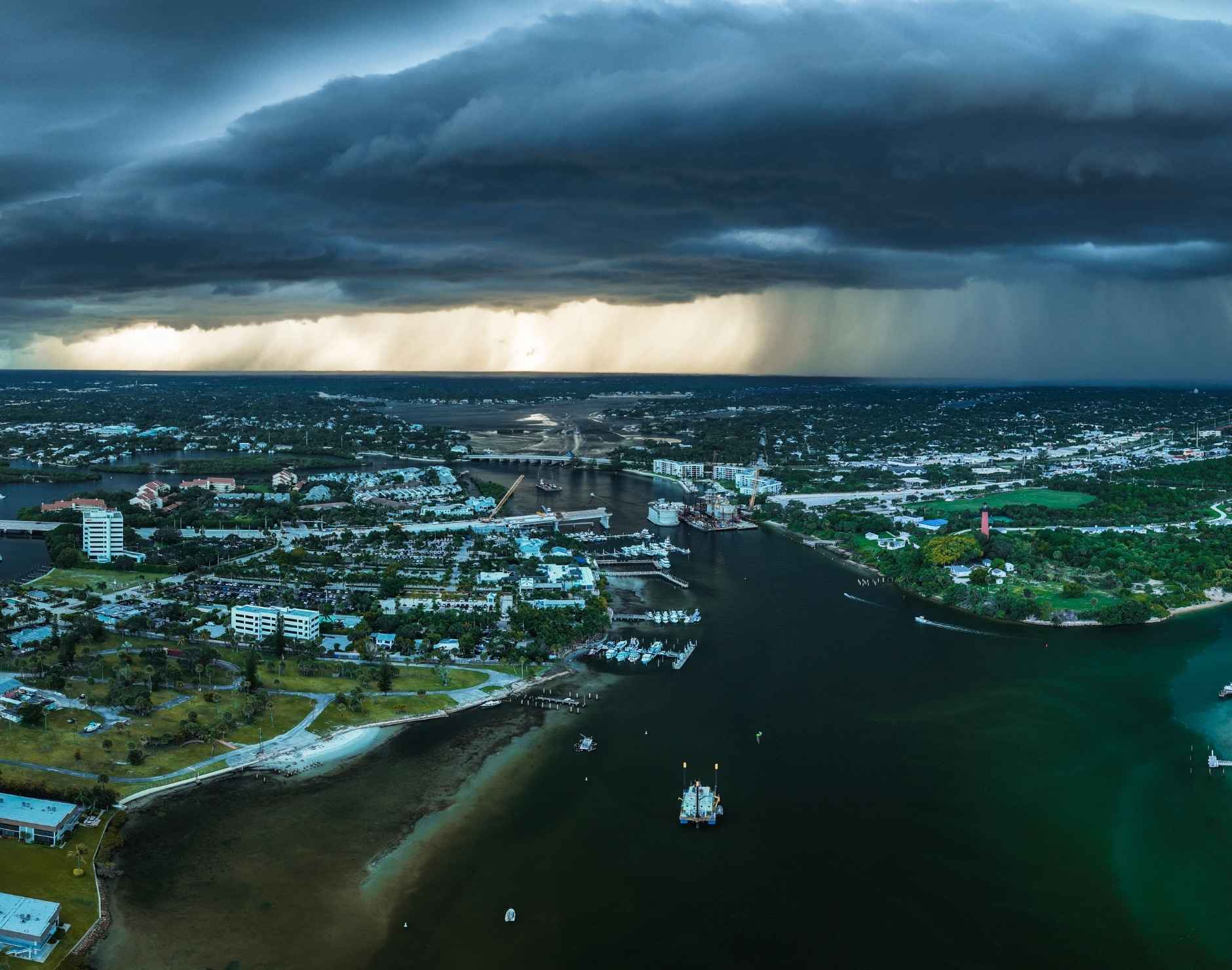
The Loxahatchee River enters the Atlantic Ocean through the Jupiter Inlet — the same inlet that serves the northern Palm Beach County boating community and that connects the river’s tidal reaches directly to the open Atlantic. This connection is what makes the Loxahatchee River a genuine coastal roofing environment rather than an inland freshwater environment, despite the river’s natural, preserved character that gives properties along it the feeling of deep inland privacy. Strong onshore winds push Atlantic salt aerosol through the Jupiter Inlet and up the river’s tidal reach — a reach that extends several miles inland before freshwater influence from the Everglades drainage system dilutes the tidal salt concentration to negligible levels.
The entire northern Palm Beach County portion of the Loxahatchee River corridor falls within the HVHZ — Florida’s High-Velocity Hurricane Zone that requires HVHZ-listed Florida Product Approvals for all roofing components and TAS-compliant installation throughout. This is not a qualification that varies by river location or property type — the HVHZ classification applies to all permitted roofing work in Palm Beach County, including every property along the Loxahatchee River from the Jupiter Inlet upstream to the county line. Contractors whose standard work is in non-HVHZ Florida markets may not carry the HVHZ-listed product inventory or the installation knowledge that the river corridor requires.
The river corridor also spans two county jurisdictions as it travels from the Jupiter Inlet northward — Palm Beach County on the southern and western banks near the inlet, and Martin County on portions of the northern bank and the upper tidal reach. Loxahatchee River properties in the stretch closest to the inlet — the most sought-after reach for access to both the river and the nearby Intracoastal — are primarily Palm Beach County properties. Properties further upstream may fall within Martin County’s jurisdiction. Verifying the correct permit jurisdiction before any roofing project begins is essential for river corridor properties where the county line is not always obvious from the address.
Upper vs. Lower River — The Specification Difference
The Loxahatchee River’s exposure conditions change meaningfully along its navigable reach, and the roofing material specification appropriate for a property near the Jupiter Inlet differs from the specification appropriate for a property several miles upstream. Understanding this gradient — and how it translates to ASCE 7-22 Exposure Category classification and material selection — allows river corridor homeowners to make specification decisions that are correctly calibrated to their property’s actual environment rather than a generic “river waterfront” standard.
Lower Loxahatchee River properties — roughly the first two miles upstream from the Jupiter Inlet — face the most demanding exposure conditions on the river corridor. The river’s width in this reach exceeds the threshold that triggers ASCE 7-22 Exposure Category D classification for properties within approximately 1,500 feet of the open water face, and the direct tidal connection to the Jupiter Inlet creates regular high-salinity conditions that drive salt aerosol concentrations comparable to Intracoastal waterfront properties. These properties require aluminum or Type 316 stainless for all metal components, PVDF coating for any metal roofing surface, and the most conservative interpretation of HVHZ installation requirements for every roof zone.
Mid-river properties — the reach between approximately two and four miles from the inlet — face a transitional exposure as the river narrows, the tidal influence diminishes, and the natural vegetation provides increasing wind and spray attenuation. Many properties in this reach may classify as Exposure Category C rather than D, depending on the specific river width at their location and the vegetation density between the river and the building. This transition from Category D to Category C is significant in the ASCE 7-22 calculations — it reduces the design wind pressures by approximately 15 to 25% relative to Category D conditions, which affects both the fastening requirements and the material specification for salt resistance. A site-specific exposure evaluation is the only reliable way to determine the correct classification for mid-river properties.
Lower river (0–2 miles from inlet): Exposure Category D, marine-grade specification Direct tidal connection to the Jupiter Inlet creates Intracoastal-equivalent salt exposure. Aluminum or Type 316 stainless for all metal components, PVDF coating throughout, maximum HVHZ installation requirements.
Mid-river (2–4 miles): transitional — requires site-specific classification Exposure Category may be C or D depending on river width and vegetation at the specific property. Do not accept a generic specification for mid-river properties — require a site-specific exposure evaluation before any proposal is finalized.
Upper river (4+ miles): Category B or C, standard HVHZ specification Substantially reduced salt exposure. Standard aluminum for metal components appropriate. Full HVHZ wind resistance compliance still required — proximity to the ocean does not change the HVHZ classification that applies throughout Palm Beach County.
Verify permit jurisdiction — Palm Beach County or Martin County depending on location The county line crosses the river corridor. Confirm your property’s permit jurisdiction before any contractor submits an application. Wrong-jurisdiction permits create project delays and inspection complications that experienced local contractors avoid entirely.
Material Selection and the Loxahatchee River Aesthetic
Roofing material selection on Loxahatchee River properties involves an aesthetic dimension that is more specific and more demanding than on most other Tequesta residential locations. The river corridor’s natural character — the preserved vegetation, the wildlife habitat, the visual connection to the Everglades ecosystem — creates a setting where roofing materials that read as industrial, out-of-scale, or discordant with the natural palette are genuinely inappropriate in ways that affect both the property’s enjoyment and its market value within a community that prizes environmental sensitivity.
Standing seam metal in earth-tone Kynar finishes — weathered copper, aged bronze, deep charcoal, and forest green are the profiles most commonly specified on river corridor properties — provides the combination of maximum performance and natural aesthetic that lower and mid-river properties demand. The PVDF coating durability means these colors will hold for decades without the chalking and fade that standard polyester coatings exhibit, maintaining the visual relationship between the roofline and the natural setting that makes river properties distinctive. The solar compatibility of standing seam is an additional consideration for river corridor properties where the owner’s environmental values often align naturally with photovoltaic installation.
For properties where tile roofing is architecturally appropriate — the river corridor includes a range of architectural styles from Florida vernacular to contemporary tropical — the specification should prioritize natural material character and earth-tone color ranges that complement the river setting. Unglazed terracotta in natural clay tones, concrete tile in warm gray and sage profiles, and cedar shake profiles in concrete tile approximations are all appropriate choices for river corridor properties where the architectural program calls for tile rather than metal. The key specification consideration for all tile on river corridor properties is the secondary water barrier — lower and mid-river properties experience the same hurricane wind-driven rain conditions as any other HVHZ property, and the SWB is non-negotiable regardless of how sheltered the property feels in normal conditions.
Finding the Right Contractor for Loxahatchee River Properties
Loxahatchee River properties present a roofer contractor selection challenge that combines the technical requirements of the HVHZ and coastal exposure zones with the aesthetic sensibility and environmental awareness that river corridor ownership embodies. The contractor who serves this community well is not the one with the highest volume, the most advertising visibility, or the most aggressively priced proposal — it is the contractor who understands the river’s specific exposure gradient, brings genuine familiarity with the permit jurisdictions that span the corridor, and approaches the material selection conversation with aesthetic intelligence rather than catalog recitation.
The technical qualifications begin with HVHZ compliance knowledge and Palm Beach County permit history. Every roofing project on the river corridor requires HVHZ-listed FPA numbers for all components — a requirement that eliminates contractors whose standard product inventory is sourced for non-HVHZ Florida markets. For lower-river properties in the direct tidal zone, the additional marine-grade material knowledge required — the difference between Type 304 and 316 stainless, the PVDF vs. polyester coating distinction, the aluminum alloy selection for direct salt exposure — is a technical qualifier that identifies contractors with genuine coastal roofing experience.
The environmental awareness qualification is specific to the river corridor. A contractor who does not know about the Wild and Scenic designation, the riparian buffer requirements, or the environmental compliance obligations that apply to construction activities near the Loxahatchee River is missing knowledge that is basic to working in this environment. This is not an obscure regulatory nuance — it is foundational context for any contractor who has done meaningful work on the river and whose crews have been trained to work in environmentally sensitive areas. Ask specifically about the environmental compliance procedures the contractor uses for debris management, runoff control, and material staging on river corridor projects.
Require a site-specific exposure zone evaluation before any proposal The river’s exposure gradient means that the correct specification varies by location. A contractor who proposes without a site-specific evaluation is applying a generic specification to an environment that requires precision.
Ask specifically about Loxahatchee River project experience and permit history River corridor experience is specific and verifiable. Request permit numbers from completed Loxahatchee River projects and verify them through the appropriate county portal — Palm Beach or Martin depending on the project location.
Discuss material aesthetic before accepting any specification The river corridor’s natural setting makes material aesthetic a genuine specification consideration, not an afterthought. A contractor who does not engage with the aesthetic dimension of the material selection has not understood what river corridor property ownership means to its owners.
Specify algae-resistant products for all river corridor tile applications The river’s humidity and canopy shade create biological growth conditions more demanding than open coastal locations. Algae-resistant tile coatings or biocide-incorporated membrane products at installation reduce the maintenance burden significantly over the system’s life.


