In This Article
The fascia board, soffit panel, and drip edge metal are three of the least glamorous components on any residential roof — and three of the most consequential for the long-term performance of everything above and below them. In Tequesta and Jupiter’s coastal environment, the roof edge assembly is the point where the roof system’s water management function ends and the building envelope’s structural protection function begins. When this transition fails — through fascia rot, soffit breach, or drip edge corrosion — the cascading consequences reach from the roof deck above to the wall framing below, and the remediation cost routinely exceeds what a correctly specified and maintained roof edge assembly would have cost over its entire service life.
Why the Roof Edge Assembly Is the Most Vulnerable Zone
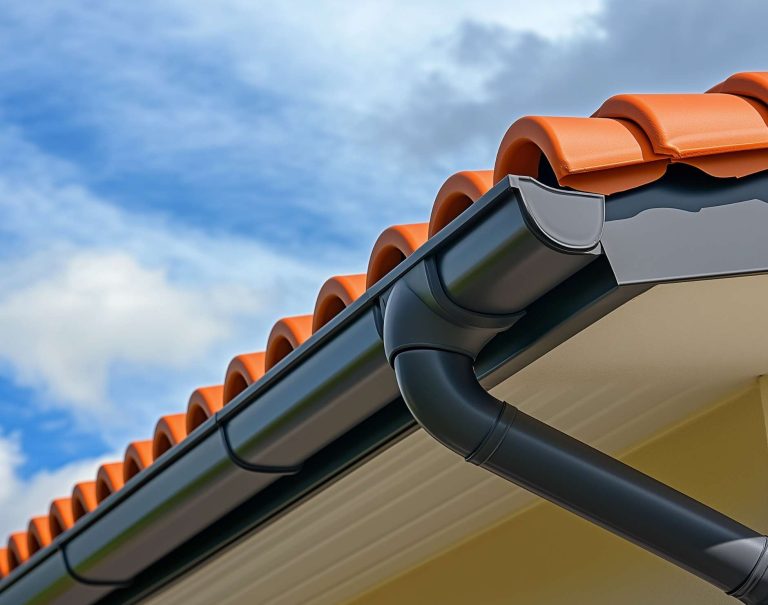
The roof edge is where multiple failure mechanisms converge simultaneously. It is the terminal point of the roof drainage system, where water flowing off the roof surface must transition cleanly to the gutter and downspout system without contacting the fascia or soffit framing. It is the attachment point for the gutter system, which exerts sustained mechanical loading on the fascia board through hanger attachments. It is the ventilation intake zone for most vented attic systems, where soffit vents must admit air while excluding insects, moisture, and wind borne debris. And it is the transition between the roofing system and the exterior wall assembly, where the drip edge metal must create a positive break that prevents capillary wicking of water onto the fascia and into the wall framing below.
Florida’s coastal environment attacks every element of this assembly simultaneously. Salt air corrodes the metal drip edge and gutter hangers. UV radiation degrades vinyl and fiber cement soffit materials. Wind-driven rain forces water horizontally into soffit vent openings that were designed for vertical drainage. Thermal cycling expands and contracts the fascia cladding relative to the substrate below, opening gaps at joints and transitions that provide pathways for moisture infiltration. The organic debris that accumulates in gutter systems — particularly the palm frond and seed pod material characteristic of coastal Palm Beach County landscaping — creates sustained moisture contact at the gutter-to-fascia junction that accelerates wood decay in any unprotected fascia substrate.
“The fascia board behind aluminum cladding can be in advanced decay while looking perfectly acceptable from the ground. By the time the failure becomes visible, you’re repairing framing, not just trim.”
Fascia: Material Selection and Failure Prevention
The fascia board serves two functions: structural — providing the attachment substrate for the gutter hanger system and the lower edge of the roof deck — and aesthetic — forming the visible vertical trim band at the roofline that defines the architectural character of the eave. The structural function demands adequate substrate strength and moisture resistance; the aesthetic function demands a finish material that maintains color stability and surface integrity in Florida’s UV and thermal environment. The conflict between these requirements drives the specification decision.
Pressure-treated lumber remains the most common fascia substrate in Florida residential construction — and the most problematic specification for coastal applications. While pressure treatment provides meaningful resistance to decay fungi and termite activity, it does not prevent moisture absorption by the wood substrate. A pressure-treated fascia board that sustains chronic moisture contact at the gutter attachment zone — through gutter overflow, gutter back-pitch, or inadequate drip edge metal protection — will develop decay at the moisture contact points regardless of its treatment level, typically within 10 to 15 years in coastal Palm Beach County conditions.
PVC cellular trim is the correct coastal fascia substrate Zero moisture absorption, no decay, no termite food source, dimensional stability through Florida’s thermal range. The 30–50% cost premium over treated lumber pays back within the first replacement cycle.
Remove aluminum cladding to inspect substrate during re-roof Aluminum cladding conceals substrate condition entirely. The cost of inspection access during re-roofing is minimal; the cost of discovering concealed decay after reinstallation is not.
Gutter hanger attachment determines substrate requirement Hidden hanger systems with structural screws require a fascia substrate with adequate pull-out strength. Confirm PVC cellular trim thickness meets the hanger manufacturer’s requirements.
Inspect rafter tails at fascia attachment points Rafter tail decay at the fascia attachment zone is the costliest roof edge failure — requiring structural repair that cannot be performed without removing roofing above. Catch it during re-roofing.
Soffit: Ventilation Performance and Durability in Salt Air
The soffit performs a function that is simultaneously structural, thermal, and hydrological — enclosing the underside of the eave overhang against weather and wildlife intrusion, providing the intake ventilation area required for balanced attic ventilation, and maintaining a finished appearance at the roofline that defines the visual quality of the exterior architecture. In coastal Palm Beach County, the soffit must perform all three functions while resisting salt air corrosion, UV degradation, and wind-driven rain intrusion at the vent openings.
Vinyl soffit has been the dominant material specification for Florida residential construction for the past 30 years, and its performance limitations in the coastal environment are well-documented. Vinyl softens and sags under sustained UV exposure — a visible deflection condition that typically appears within 10 to 15 years in direct sun exposure. Salt air accelerates the oxidation of the vinyl surface, producing a chalky, discolored appearance that cannot be restored without replacement. Vinyl soffit panels at the exposed eave of a coastal property within the salt spray zone should be specified with an understanding that 15-year replacement cycles are the expected maintenance reality.
“Vinyl soffit on a coastal property within the salt spray zone is a 15-year material on a 40-year building. Aluminum with Kynar coating extends that to 30 years. The specification decision compounds over the building’s life.”
Drip Edge: The Code-Required Detail That Most Roofs Get Wrong
Drip edge is the L-shaped or T-shaped metal flashing installed at the eave and rake edges of a roof deck — between the deck and the underlayment at the eave, and over the underlayment at the rake. Florida Building Code requires drip edge on all new roofing installations. Despite this requirement, drip edge is one of the most frequently omitted, incorrectly installed, or inadequately specified components in Florida residential roofing — and its omission or failure creates the water entry pathway responsible for a significant portion of the fascia and soffit decay we document on re-roofing inspections.
The physics that drip edge addresses are straightforward. Water running off a roof surface has surface tension that causes it to adhere to the underside of the roofing material and wick back toward the fascia rather than dripping cleanly off the roof edge. Without a drip edge metal that extends beyond the fascia face and creates a positive drip break, this capillary action directs water directly onto and behind the fascia, creating the chronic moisture contact that initiates fascia decay. The drip edge extends the waterproof surface beyond the fascia face and creates a physical break that interrupts the capillary action.
Aluminum drip edge minimum 0.027-inch for coastal applications Thinner profiles bend under wind loading and lose their drip break function. Galvanized steel corrodes in the salt spray zone — aluminum only for coastal properties.
Eave: drip edge under underlayment — Rake: drip edge over underlayment Reversing this sequence at either location creates a water entry pathway. Verify installation sequence with your contractor before underlayment is installed.
Replace drip edge at every re-roofing project Reusing existing drip edge during re-roofing saves negligible cost against the full project and carries existing corrosion and deformation into the new system. Always replace.
Address the complete roof edge assembly in one project Fascia, soffit, drip edge, and gutter system are most cost-effectively replaced together during a re-roofing project. Accessing them individually after the new roof is installed multiplies the cost.